
Shortly past 8 p.m. on the previous Saturday, a young hitman, disguised in a white hoodie, emerged from Hotel Alamada and strolled approximately 50 meters to Plaza Morelos in the heart of Uruapan, a city in western Mexico recognized as the avocado capital of the world.
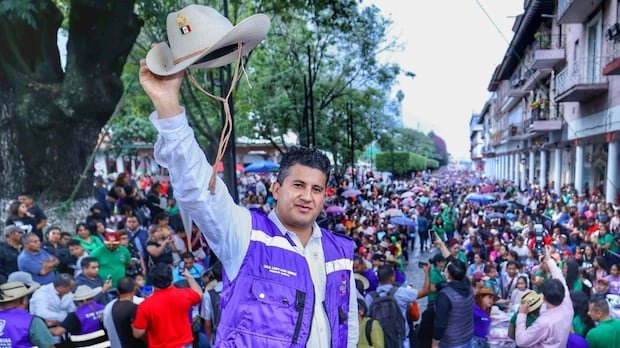
His objective was Mayor Carlos Manzo, a figure who had gained national attention for boldly challenging the heavily armed criminal organizations that have wrought violence in his region during power struggles over territory.
The assassin, armed with a 9-mm Beretta handgun, navigated through the crowds in the plaza, which included families with children gathered for the Festival of Candles, part of the local Day of the Dead festivities.
Surveillance footage provided by local authorities, along with a detailed sequence of events, depicted the assassin closing in on Manzo, who was also attired in white and accompanied by his wife and two children as he mingled with the crowd.
Upon reaching Manzo, the assassin fired seven shots before the mayor’s bodyguards, assigned by the federal government, belatedly responded with deadly force.
The assassination of Manzo sparked a wave of outrage that has now manifested in protests across Michoacan, a state known for producing avocados and limes exported to Canada.
Michoacan State Attorney General Carlos Torres Piña, heading the criminal investigation, identified the deceased assailant on Thursday as 17-year-old Víctor Manuel Ubaldo Vidales, from Paracho, Michoacan, situated about 40 km north of Uruapan.
Torres Piña revealed that Ubaldo Vidales, who was addicted to methamphetamines, had been missing from home for about a week leading up to the incident and was under the influence of methamphetamines and THC during the attack. Ballistics tests confirmed that his weapon had been used in three previous killings in two separate incidents the prior month.
Manzo became the seventh mayor to be assassinated in the state since 2022 and the second high-profile figure killed within a two-week timeframe. The tumultuous events have stirred unrest in Michoacan, with the population expressing frustration over the prevailing violence and impunity in the region. The sentiment has also reverberated 400 kilometers away in Mexico City.
Francisco Garcia Davish, founder of Quadratin Mexico, a news agency operating in Michoacan and 22 other Mexican states, highlighted the unprecedented public reaction to the political assassination, describing it as a “social rebellion.”
The demonstrations, marked by incidents of violence where state and municipal buildings were vandalized, prompted Manzo’s widow to issue a plea for peaceful protests through a video message on social media.
Stability in Michoacan had been disrupted by successive federal government military operations targeting established cartels in the region, leading to a fragmented landscape of armed factions vying for control, according to experts.
Manzo stood out as a courageous and principled mayor who defied criminal influences and chose to confront organized crime groups despite limited resources, noted security consultant David Saucedo.
The article continues to delve into the legacy of Manzo, his anti-crime movement, and the complex dynamics of criminal power struggles in Michoacan, shedding light on the multifaceted challenges facing the region.

