
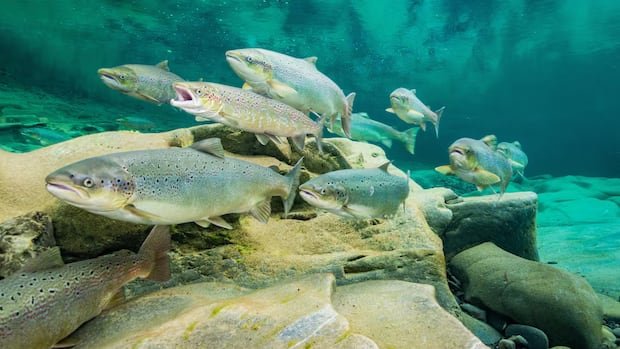
A dispute over salmon is brewing in Atlantic Canada, pitting fish farmers who operate in ocean pens against the Atlantic Salmon Federation, a conservation group. The conflict centers around the allocation of over $80 million in new federal funding dedicated to stabilizing and restoring wild Atlantic salmon populations.
The controversy came to light when Tom Taylor, the executive director of the Atlantic Canada Fish Farmers Association, penned a letter to Prime Minister Mark Carney and Fisheries Minister Joanne Thompson. In the letter, Taylor insisted that the federation should not receive any portion of the new $81.7-million federal fund intended for the recovery of wild Atlantic salmon populations, some of which are classified as endangered.
Taylor characterized the federation as a “foreign-funded, activist organization” aiming to dismantle the farmed salmon industry in Atlantic Canada. He criticized the federation for allegedly spreading misinformation to dissuade consumers from consuming farmed salmon, citing the “Off the Table” campaign as an example. This campaign, an offshoot of an international movement, advocates for the removal of farmed salmon from hospitality industry menus, claiming it is harmful to the environment, human health, and wild salmon populations.
In response, Neville Crabbe, vice-president of communications for the Atlantic Salmon Federation, defended the federation’s stance, emphasizing its role as a conservation organization advocating against the negative environmental impacts of fish farming. Crabbe clarified that the federation does not seek to shut down the industry entirely but opposes its expansion into new geographic areas.
The fish farmers are concerned about the potential threat to their industry, highlighting the significant economic contributions of salmon farming to Atlantic Canada, including the employment of 9,400 individuals and the generation of $3.2 billion in economic activity annually. Despite the ongoing conflict, both sides are standing firm in their positions, with Taylor urging the federation to refocus on genuine conservation efforts.
The article also mentions the recent decision by Ottawa to ban open net-pen salmon farming in British Columbia coastal waters by 2029, raising concerns among Atlantic fish farmers about the future of offshore fish farming. The federation, meanwhile, has announced plans to supplement the government funding with $25 million from private donors to support wild Atlantic salmon conservation efforts.
In conclusion, the disagreement between fish farmers and the Atlantic Salmon Federation underscores the complex interplay between economic interests and conservation priorities in the region.

