
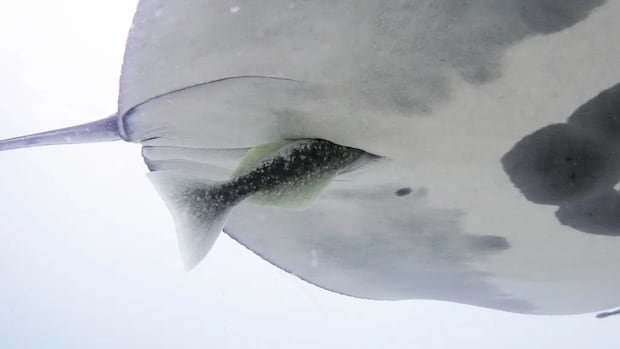

Remoras, also known as suckerfish, are not always the most courteous companions during their oceanic travels.
These small fish hitch rides by attaching themselves to larger marine animals like sharks, whales, and manta rays, feeding on parasites in exchange for transportation. However, recent research indicates that having a remora along may not be entirely beneficial for manta rays.
“These fish are heading directly into the cloaca of manta rays,” explained marine researcher Emily Yeager from the University of Miami in an interview with Nil Kӧksal from As It Happens. “It could cause discomfort for the rays.”
Yeager, a PhD candidate, led a new study on this behavior, published in the journal Ecology and Evolution this month.
Termed as ‘cloacal diving’
This behavior, known as “cloacal diving,” involves the fish entering the host’s cloaca, a single opening for reproduction and waste expulsion.
Past instances of cloacal diving were observed between remoras and whale sharks, much larger than manta rays. However, this study marks the first documented evidence of such interactions between remoras and rays.
Researchers documented seven occurrences across various locations and 15 years, suspecting more frequent incidents.
“This phenomenon is likely underreported since the remoras often remain hidden within the manta ray,” Yeager noted. “They deeply embed themselves into that area.”
According to Yeager, the remoras might be reacting out of fear. In a video, a diver startled a male Atlantic manta ray, prompting a nearby remora to swiftly dive into the ray’s cloaca opening, causing the ray to shudder before continuing swimming.

Remoras, also known as suckerfish, are famous for hitching rides on large marine animals like sharks and manta rays. But a new study observes the small fish getting more intimate — diving straight into the manta ray’s rear-end opening. Credit: Bryant Turffs/Marine Megafauna Foundation.</

