
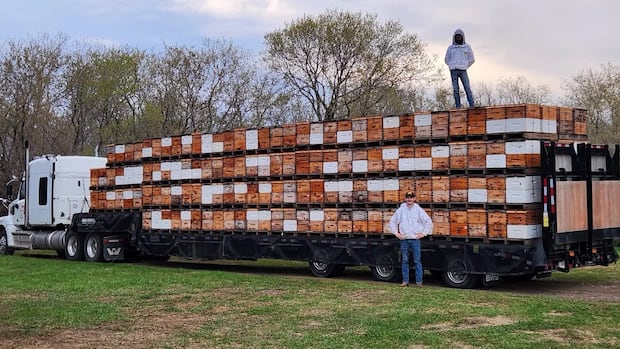
Osee Podolsky, the general manager of Podolski Honey Farms, reports that the overwhelming majority of honey produced by the family-owned operation in Ethelbert, Manitoba, is sent to clients throughout the United States.
He now fears that the farm, established by his grandfather over seventy years ago, may face bankruptcy following the U.S. government’s implementation of a 50 percent tariff on $28 billion worth of Canadian goods, including natural honey, which took effect just after midnight on Saturday.
“Shipping to our regular customers is no longer viable,” Podolsky explained, emphasizing that around 90 percent of the honey produced by the Ethelbert business is exported to the U.S.
“Essentially, we are out of business. While we can attempt to capture more of the Canadian market, if numerous other beekeepers are doing the same, it could lead to a race to the bottom,” he added.
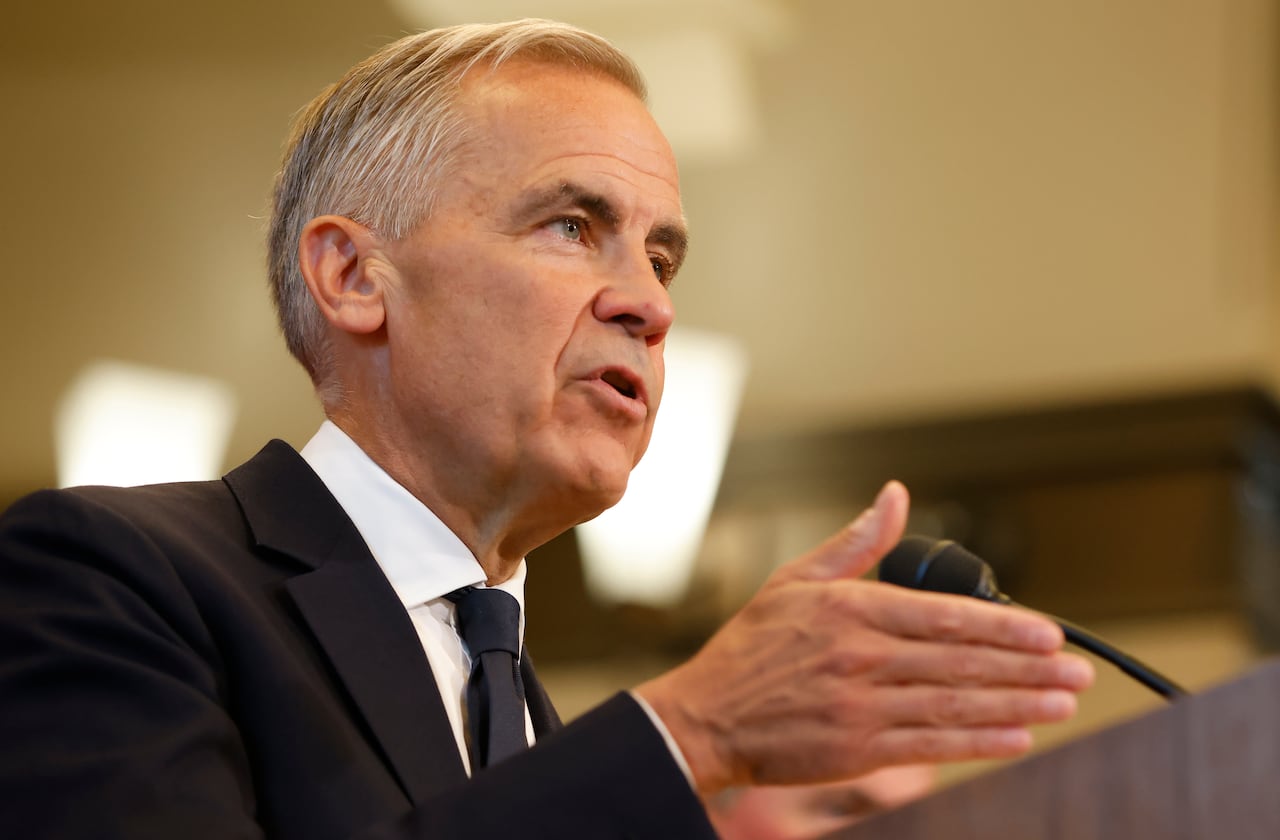
Prime Minister Mark Carney stated that Canada exited trade negotiations with the United States after the Americans ‘demanded too much and offered too little.’ (Patrick Doyle/The Canadian Press)
The newly imposed tariffs by Washington were enacted early Saturday morning after Canadian and American negotiators failed to reach a consensus following several days of discussions.
During a news conference on Saturday, Prime Minister Mark Carney remarked that the two neighboring countries had been progressing towards a “mutually beneficial agreement” until the U.S. introduced new terms that were “uneconomic, unjust, and undermined the overall benefits to Canada.”
He noted that U.S. negotiators raised concerns regarding Canada’s French language protections, including bilingual labeling requirements for products sold within Canada, and even proposed limits on Canada’s capacity to engage in trade agreements with other nations, among other last-minute stipulations.
-
Premiers support Carney as trade conflict with U.S. intensifies
-
Read Mark Carney’s complete remarks after U.S. trade talks collapsed
Carney stated that the U.S. had “demanded excessive concessions while providing inadequate offers,” leading Canada to “walk away from an unfavorable agreement.”
“There were certain matters we were unwilling to concede. We could not jeopardize Canada’s sovereignty or compromise our vital industries,” the prime minister asserted.
Carney announced that retaliatory tariffs, equating to dollar-for-dollar, are anticipated to be implemented following Labour Day.

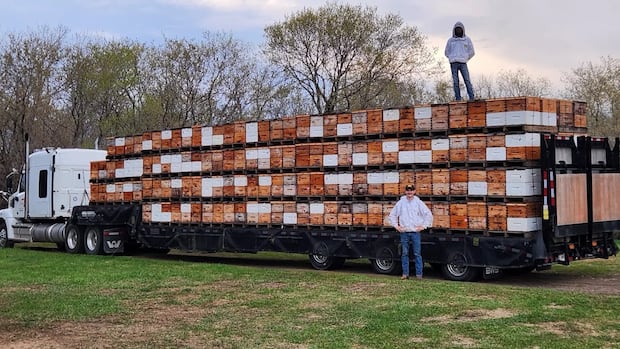
Podolski Honey Farms in Ethelbert, Manitoba, markets approximately 90 percent of its honey to U.S. customers. (Submitted by Osee Podolsky)
Podolsky remarked that small enterprises like his family’s honey farm are effectively “collateral damage” in this tariff conflict, leaving some business owners feeling “powerless” at present.
Honey production typically concludes by August, with workers hustling to package the honey into barrels and dispatch it to clients.
However, this year’s new tariffs will significantly impact the company’s financial performance, as sales usually begin in September and continue through the fall.
“We rushed to get as much inventory as possible shipped to clients before the tariff threat became reality,” Podolsky explained.
“If these tariffs remain in place, I can’t afford to sell under such conditions. I would go bankrupt.”
The farm intends to fulfill its obligations to Canadian clients using the remaining honey barrels, and then Podolsky indicates they will consult with an accountant to devise a strategy for the upcoming months.
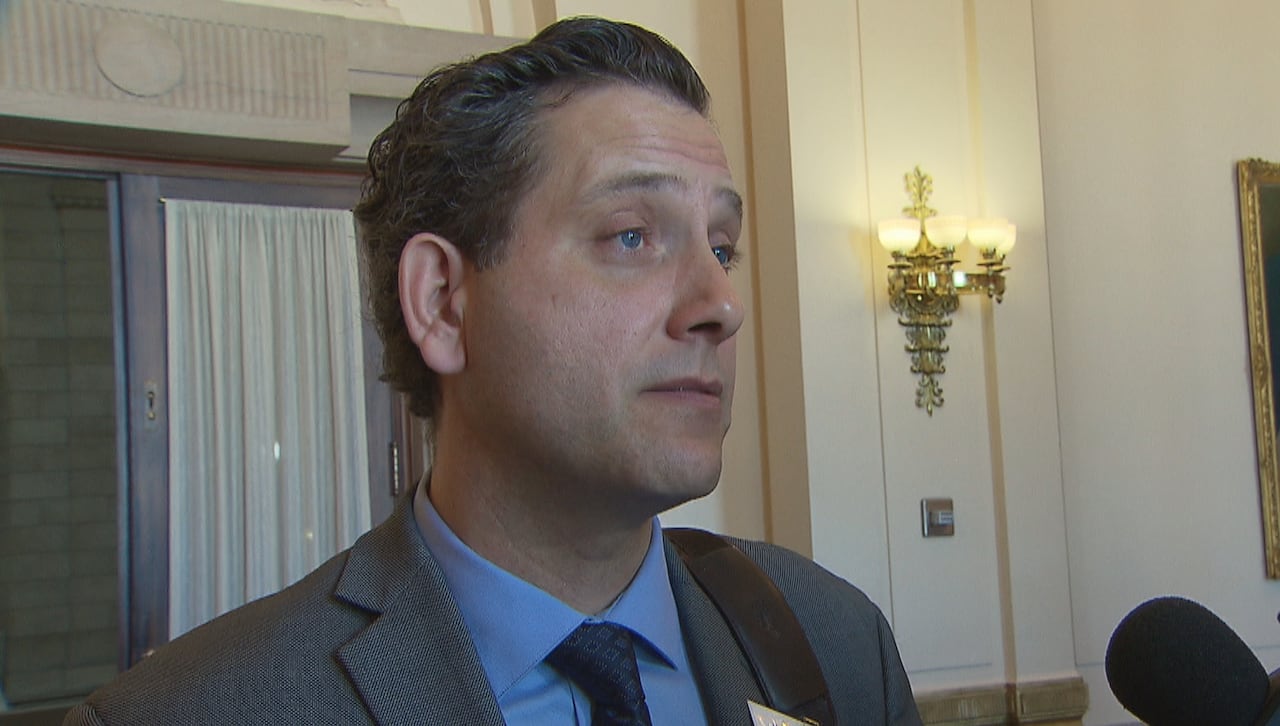
Loren Remillard, president and CEO of the Winnipeg Chamber of Commerce, believes Canadian negotiators should hold out for a fair trade agreement with the U.S. (John Einarson/CBC)
Loren Remillard, who serves as president and CEO of the Winnipeg Chamber of Commerce, expressed his disappointment and surprise after the U.S. tariffs took effect.
Many business owners in Manitoba’s largest city had been optimistic that negotiators were merely finalizing minor details. However, that optimism faded as the weekend approached, according to Remillard.
“As the negotiations dragged on, my discussions turned increasingly anxious,” said Remillard regarding his conversations with local business owners.
Despite preparing for “significant economic hardship,” he stated that the chamber supports Canada’s choice to withdraw from trade discussions after the U.S. introduced terms that posed “far larger questions about sovereignty.”
“It is crucial that we remain steadfast and unite under the Team Canada message,” he urged, encouraging local consumers to support products made in Canada whenever possible.
“We need to secure the right agreement for Canada. However, it cannot just be any deal; it must be the right deal for Canada,” he emphasized.
Mayor Larry Johannson of Selkirk expressed his disappointment but not surprise regarding the tariffs affecting the steel industry, a significant employer in the city.
While the U.S. remains “unpredictable” for business dealings, Johannson mentioned his desire to see increased trade opportunities between provinces and with other countries seeking to purchase Selkirk steel.
“We should prioritize Canadian businesses. Let’s set aside our provincial barriers and focus on trade,” he concluded.
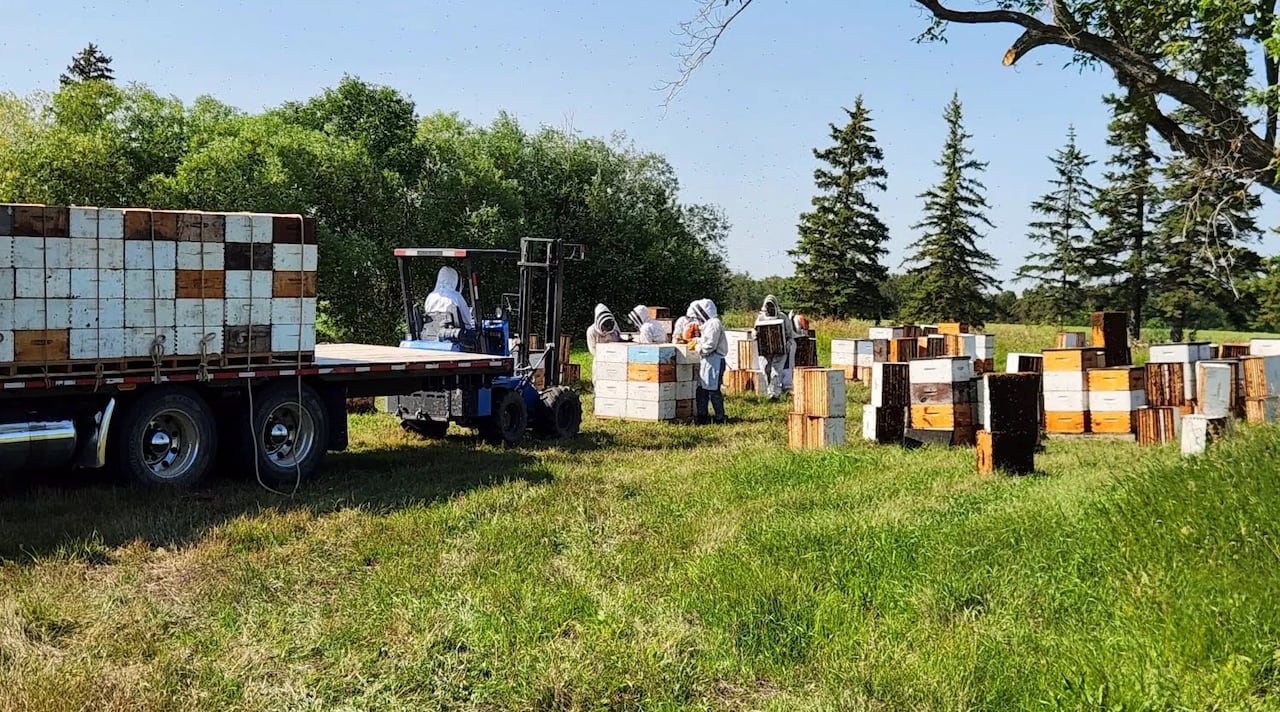
Osee Podolsky, general manager of Podolski Honey Farms, believes that beekeepers on both sides of the border gain from Canada-U.S. trade. The U.S. is a net importer of honey, while Canadians frequently purchase beekeeping supplies from American producers, he noted. (Submitted by Osee Podolsky)
Podolsky remarked that beekeepers in both Canada and the U.S. benefit from their trade relationship, with Americans purchasing surplus honey and Canadians acquiring beekeeping equipment from U.S. manufacturers.
He is advocating for the removal of the tariffs.
“I sincerely hope our governments can come to a resolution and eliminate these tariffs,” Podolsky expressed.
“I believe it will take some time for both parties to arrive at an agreement or resolution. I just hope it happens sooner rather than later.”
Manitoba Premier Wab Kinew presented a united front on Saturday afternoon, stating that the province of Manitoba fully supports the Canadian government’s decision to withdraw from trade negotiations with the U.S. late Friday night.

