
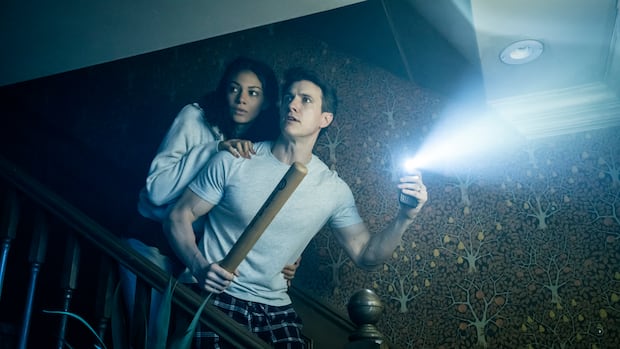
During the premiere of the Paranormal Activity stage production in Toronto this June, the lead actor was met with a boo from an audience member right in the midst of his performance. The heckler appeared to be discontent not with the acting itself, but rather with the character’s decisions on stage.
Immediately, other spectators began to shush the booer, and many later expressed their dismay online, lamenting the decline of proper theatre decorum.
“The person who booed after such an amazing monologue deserves to be shadow-banned … for real. This isn’t a pantomime,” commented one Reddit user, referencing the lively atmosphere typical of slapstick pantomimes.
Others voiced their concerns about various audience behaviors at the Mirvish production, including the anxious laughter and chatter that erupted following each jump scare, typical of the horror-movie series.
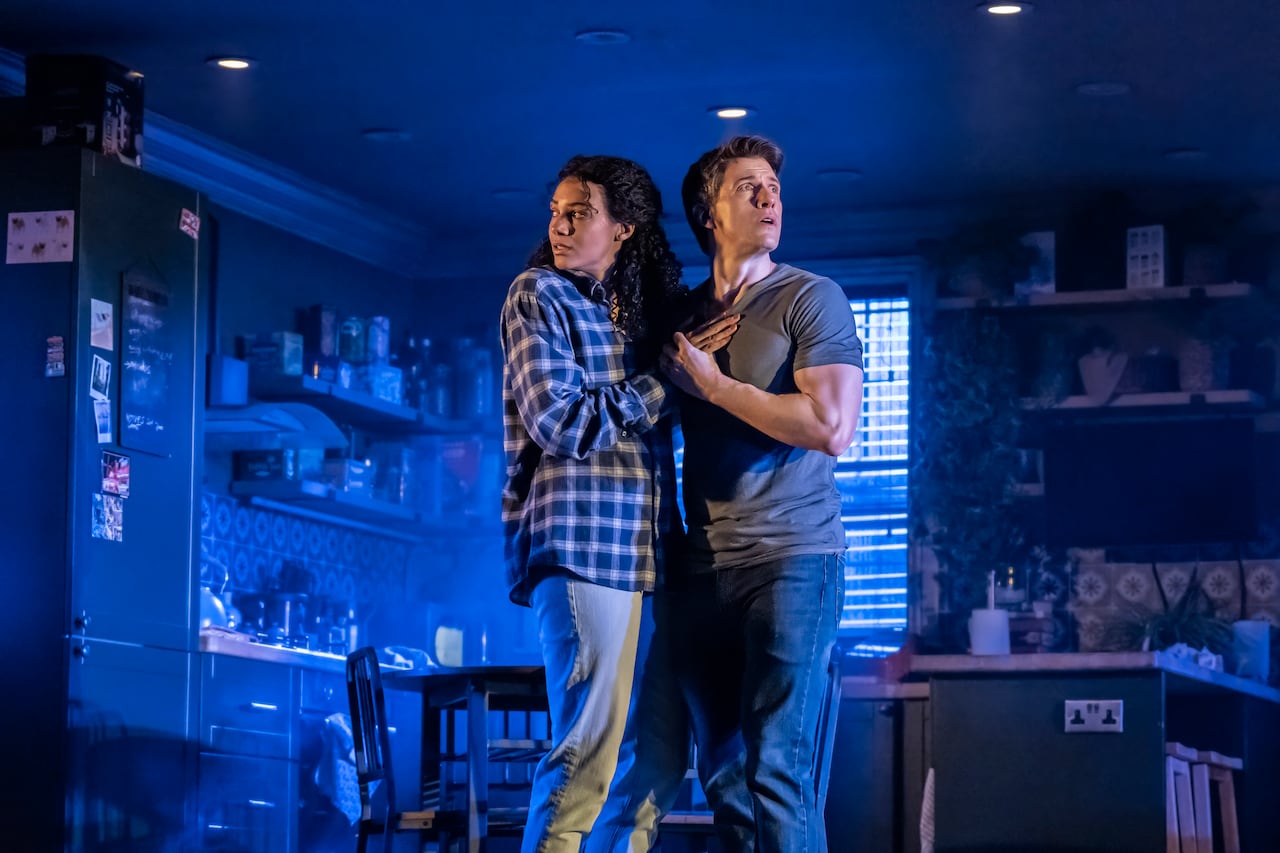
Heusinger, right, acknowledged that the Paranormal Activity stage show attracts an audience unfamiliar with theatre etiquette, and he is not bothered by it. (Johan Persson)
Adapting to a lively audience
Patrick Heusinger, who has been performing in Paranormal Activity since its inception in 2025, is not fixating on audience conduct.
“We bring in an audience that might not have prior theatre experience. As a result, we encounter individuals who are unaware of the etiquette and often feel as if they are in their own homes,” he explained to CBC News.
“We’ve grown accustomed to it; people munching on popcorn and tearing open candy during tense scenes.”
He mentioned that the booing incident didn’t particularly upset him, as he believes that great art is meant to provoke some form of response.
“Engage with it,” Heusinger encouraged. “If something prompts you to interact with us, we welcome it. We have things under control here.”
Launching the ‘chilled performance’
Such interruptions might become more frequent now that Mirvish has introduced its first “chilled performance” of & Juliet, a jukebox musical that presents a different, uplifting conclusion to a Shakespearean classic.
While the songs feature popular hits, participating in sing-alongs during standard performances may lead to trouble.
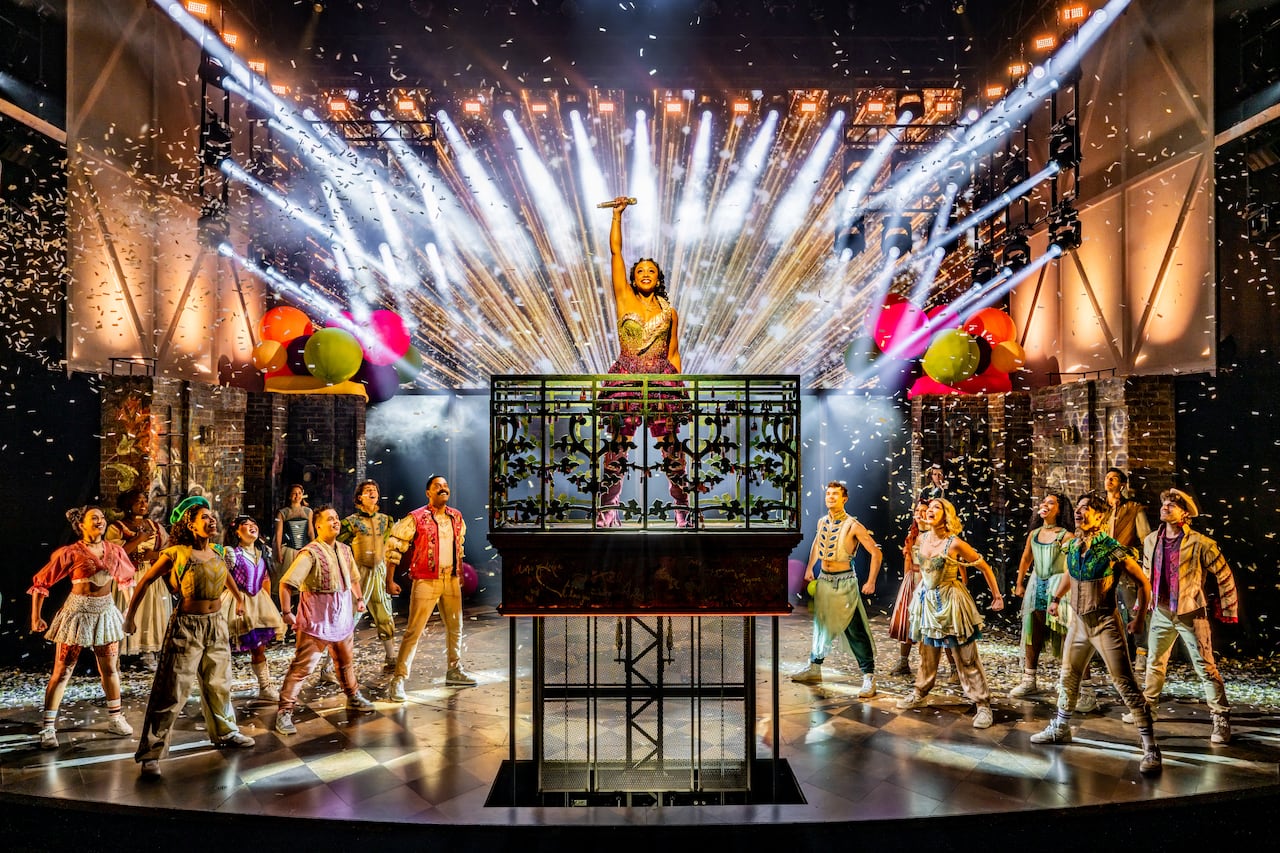
Vanessa Sears plays the lead role in & Juliet, which will soon be available for audiences in a more ‘chilled’ setting. (Dahlia Katz)
“Feedback we receive is often, ‘I came to hear professionals, not other audience members,'” said John Karastamatis, the director of communications and programming for Mirvish Productions.
These performances are crafted by individuals who have spent their lives perfecting their skills.
During a “chilled performance,” the show’s content remains unchanged, but:
- The house lighting is set to half brightness.
- Audience members may come and go freely.
- Noises are permitted.
These more relaxed guidelines can open the theatre experience to a broader audience — from dementia sufferers who enjoy music but may struggle to remain quiet, to individuals with involuntary vocal tics.
Karastamatis emphasized that the intention behind these performances is to create an inclusive environment, welcoming not only those who identify as neurodivergent but anyone who desires a more laid-back atmosphere.

Cineplex is providing various movie-going experiences to accommodate changing audience needs. (Patrick Morrell/CBC)
Transformations in cinema
Cineplex continues to remind patrons to silence their cell phones before films and to keep their thoughts to themselves, yet chief marketing officer Sara Moore acknowledges that audience behavior is changing, and cellphones are here to stay.
“We recognize that people do pull them out. Parents receive updates from babysitters,” she noted. “Most people, though, are quite considerate.”
The current strategy, she said, is to offer audiences the experiences they seek, which sometimes includes noise and cellphones.
“We’ve had exuberant sing-alongs to productions like Wicked and Taylor Swift,” she remarked. “We’ve broadcast cricket matches and Raptors basketball in our theatres. However, we ensure to inform moviegoers in advance so they know what to expect.”
‘Classist, elitist’ unspoken norms
Centuries ago, those in the cheaper seats at Shakespeare’s Globe theatre were close enough to lean on the stage, make noise, or even toss vegetables if they were displeased.

Toronto theatre critic Ryan Borochovitz recognizes why audiences become annoyed with cellphones but argues that dimming the house lights rather than turning them off could lessen distractions. (CBC)
“Modern theatre etiquette was mostly established in the mid to late 19th century,” remarked Toronto theatre critic Ryan Borochovitz.
Recent unspoken guidelines — prohibiting talking, cellphones, and crinkling food wrappers — whether intentional or not, have created a barrier: “to exclude economically disadvantaged individuals from the theatre or to make them feel unwelcome due to ignorance of the rules,” he stated.
He believes theatres could implement changes to enhance everyone’s enjoyment, such as dimming the house lights instead of completely turning them off, making bright screens less distracting when someone checks their phone.
For Borochovitz, clarity in expectations is essential. Do not promote Mamma Mia! as a performance encouraging audience members to dance if you don’t genuinely want them to. And avoid reprimanding someone for looking at their cellphone unless they’ve been specifically instructed to turn it off.

