
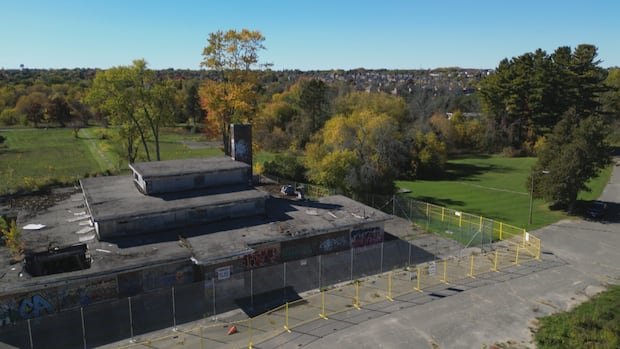
Marilyn Morawetz gazes at the decaying walls of a historic cafeteria structure, admiring its prairie-style design amidst an industrial backdrop. Expressing concern over its potential demise, she fears the loss of the entire site, including five other heritage buildings that once comprised Camp 30 in Bowmanville, Ontario. This century-old building, which ceased operations in 2008, holds significant historical value as a former reform school for boys in the 1920s and later as a residence for 800 German prisoners of war during World War II.
The cafeteria witnessed the Battle of Bowmanville, a unique three-day conflict involving the prisoners using hockey sticks and pipes instead of firearms. As the chair of the Jury Lands Foundation, a non-profit overseeing site preservation, Morawetz faces a critical juncture as Clarington’s council deliberates the fate of the cafeteria, the sole municipally-owned building among the heritage structures.
Following negotiations in 2022, Clarington assumed ownership of the cafeteria from Kaitlin Corporation, leaving the other buildings and land in the developer’s hands. Despite initial plans for a costly full restoration exceeding $20 million, the council now considers various options, including demolition as the most economical choice.
One alternative involves temporarily stabilizing the building to ensure public safety and enable community use, potentially serving as a communal space for up to 20 years. The establishment of a garden nearby, utilized to donate produce to local food banks, exemplifies the site’s potential as a valuable community asset for events and gatherings.
In contrast, Clarington Mayor Adrian Foster leans towards demolishing the cafeteria and constructing a replica building to preserve its history without the financial burden of renovation. However, the Jury Lands Foundation advocates for funding stabilization efforts through community benefits charges and heritage grants, supported by a settlement offer from Kaitlin Corp. proposing to return all buildings and land for public park space dedication.
As Clarington grapples with financial constraints in maintaining the cafeteria, the impending decision on the site’s future rests on balancing preservation efforts with practical considerations. The council’s impending debate on the matter underscores the significance of this historical landmark to the local community.

