
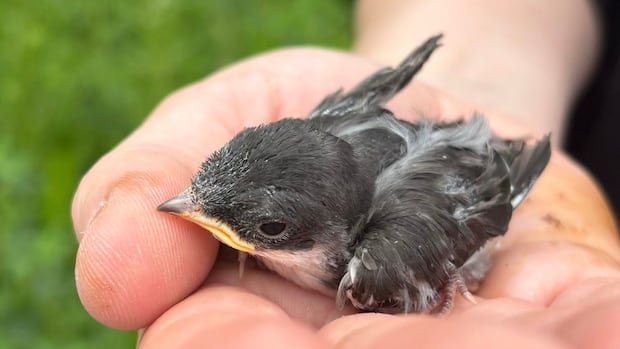
Long Point Bird Observatory, situated on a 40-kilometre sandspit near Lake Erie in southwestern Ontario and designated a UNESCO Biosphere Reserve, is home to a diverse array of wildlife. As the oldest continuously operating bird sanctuary in North America, it faces challenges due to climate change affecting its inhabitants.
Recent research published in the Proceedings of the National Academy of Sciences reveals concerning trends at Long Point. The study, conducted by researchers from the University of Michigan and Birds Canada using historical data from the observatory, shows that tree swallows have been laying fewer eggs and experiencing a decrease in body size since monitoring began in 1969.
Aerial insectivores, like tree swallows, have seen a significant decline of 43%, while insect populations have plummeted by over 60% since 1977. This trend underscores the impact of climate change on the delicate ecosystem of Long Point Bird Observatory.
Lead author of the study, Charlotte Probst, a PhD student at the University of Michigan, emphasized the importance of tree swallows as a model organism for research due to their nesting habits, which allow for non-invasive monitoring. The study highlights a phenological mismatch caused by climate change, with insects emerging earlier in the year than before, leading to challenges in food availability for the swallows during breeding seasons.
Matthew Fuirst, a research ecologist at Birds Canada and co-author of the study, noted that years with low insect abundance resulted in poor conditions for the birds, leading to smaller body sizes and reduced egg production. The mismatch in timing has been increasing by more than three days per decade since 1977, as shown by historical data.
Further research by Hadil Elsayed, a PhD candidate at York University, indicates a two-week earlier emergence of insects due to rising temperatures. This discrepancy, coupled with declining insect populations, poses a significant threat to tree swallow populations and the overall ecosystem at Long Point.
To address these challenges, experts recommend local conservation efforts, such as planting native wildflowers, reducing pesticide use, and preserving habitats for insects. By understanding the interconnectedness of species within the ecosystem, proactive measures can be taken to mitigate the impacts of declining insect populations on tree swallows and other wildlife in the region.

