
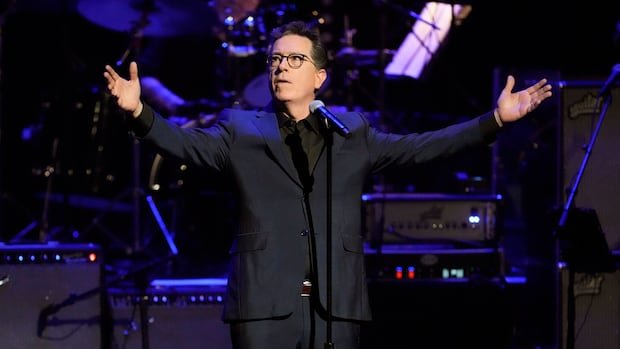
A clash between comedian Stephen Colbert and the network that broadcasts his late-night program has drawn attention to a longstanding broadcasting regulation known as the equal time rule. During Monday night’s episode of “The Late Show with Stephen Colbert,” the host revealed that CBS lawyers had explicitly prohibited him from featuring an interview with Texas Democratic candidate James Talarico, who is vying for a Senate seat. Colbert humorously addressed the situation on the show, shedding light on the disagreement and its underlying reasons.
CBS contested Colbert’s portrayal of the incident in a statement, clarifying that they had simply provided legal counsel warning that the broadcast might trigger the FCC’s equal-time rule. The equal time rule mandates that broadcasters offer equal airtime to all candidates participating in elections, forming the basis of the dispute between Colbert and his employer.
The regulation, a component of the Communications Act of 1934 that governs broadcasting in the United States, stipulates that if one candidate receives airtime on a program, all other contenders for the same office must be afforded equal opportunities. While commonly referred to as the “equal time” rule, it also includes provisions concerning political advertisements. Exceptions exist, such as for newscasts, genuine interview programs, live event coverage, and documentaries.
Historically, political interviews on talk shows have been viewed as exempt from the rule due to their role in informing viewers. It is important to note that the equal time rule solely applies to broadcast television and radio, excluding content on streaming services and social media platforms, as well as most cable programming.
Recent developments have indicated a shift in interpretation under the Trump administration. The Federal Communications Commission issued new guidance in January indicating that talk shows might not automatically be exempt from the equal time rule. The FCC emphasized that decisions would be made on a case-by-case basis and cautioned against programs motivated by partisan objectives.
Colbert critiqued FCC Chairman Brendan Carr for what he perceived as partisan motivations, insinuating that the administration sought to stifle criticism on television. Despite denials of censorship by Carr, the FCC’s actions have raised concerns about the potential impact on media freedom and expression.
While the interview Colbert was barred from airing is available on digital platforms like YouTube, the ongoing debate over terrestrial television regulations underscores the enduring significance of the equal time rule in preserving diverse viewpoints in media. Communication and technology lawyer Harold Feld advocates for expanding the rule to encompass other media formats to safeguard against information exclusion.
Looking ahead, there are apprehensions that the FCC’s recent stance could deter broadcasters from featuring political interviews, potentially depriving audiences of crucial electoral information. As debates continue, the balance between regulatory compliance and free expression remains a focal point in the evolving media landscape.

