
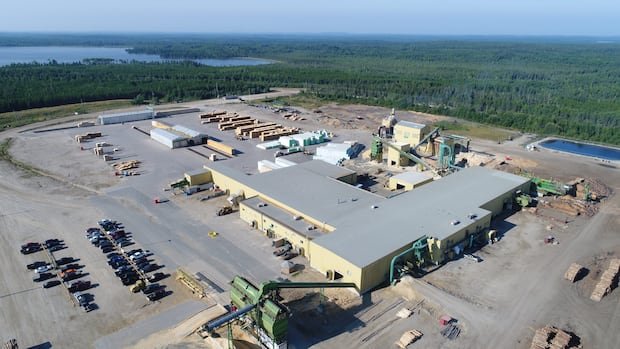
The town of Ear Falls, Ontario, is grappling with a severe situation following the abrupt and indefinite closure of its sawmill, which serves as the primary employer and economic engine for the community. Interfor, the company in charge of the mill, made the announcement recently, leaving around 150 unionized workers jobless, as per the town’s mayor.
Luke Hildebrand, the president of the NDP Kenora-Rainy River Riding Association and a First Nations law practitioner in Kenora, described the shutdown as not just a loss of jobs but a crisis affecting the entire community. In response, Hildebrand initiated a petition urging the Ontario and federal governments to intervene promptly to assist impacted workers and establish a Forestry Job Protection Task Force.
The mayor of Ear Falls, Kevin Kahoot, expressed his shock upon learning of the closure, which was attributed to a stagnant lumber market and the impact of U.S. countervailing tariffs. Kahoot emphasized the mill’s significance as a longstanding pillar of the community, offering stable employment and benefits to its workforce.
While the exact number of jobs at risk is yet to be confirmed, Kahoot stated that the township is actively engaging with the province to explore various solutions. Premier Doug Ford and Kevin Holland, Parliamentary Assistant to the Minister of Northern Development, have assured their support for the town, emphasizing the need to find viable alternatives in the wake of the shutdown.
Unifor, a union representing workers, also called for immediate government action following Interfor’s decision, citing the closure as part of a broader trend impacting the forestry industry. The shutdown has garnered attention from both provincial and federal officials, with calls for concrete plans to address the repercussions on the local economy and workforce.
In response to criticisms regarding the lack of government intervention, officials have highlighted ongoing efforts to safeguard Ontario’s forestry sector and provide support to affected workers. Measures such as investments in modernizing mills and facilitating re-employment services have been mentioned to mitigate the impact of the sawmill closure on the region.

