
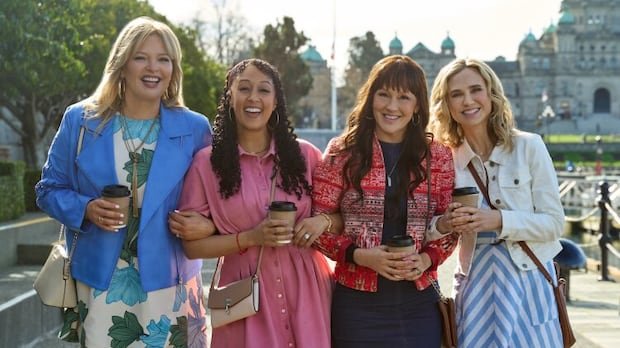
An upcoming film on Hallmark Channel titled “All’s Fair in Love and Mahjong” has sparked controversy due to concerns about its portrayal of Chinese cultural elements. The movie revolves around a school nurse who rediscovers hope and connection through teaching Mahjong, a Chinese tile-based game with a rich history dating back to the 1800s.
The lead role in the film is played by Yan-Kay Crystal Lowe, a Canadian actor with a Chinese background, who portrays a character involved in a Mahjong club alongside Fiona Gubelmann. Despite Lowe’s heritage, criticism has arisen over the lack of Asian representation in the rest of the cast.
The announcement of the movie’s poster featuring Lowe, Gubelmann, and non-Asian actors like Tamera Mowry-Housley, Paul Campbell, and Melissa Peterman drew online backlash. Critics, including author Nancy Wang Yuen and Wong Fu Productions co-founder Philip Wang, expressed disappointment over what they perceived as cultural insensitivity, especially given the timing close to Asian American and Pacific Islander Heritage Month.
The film, directed by Canadian Jessica Harmon, is set to release on May 9. While the specifics of its treatment of Chinese culture and Mahjong remain undisclosed, a Hallmark spokesperson emphasized that the movie respects the game’s origins and its role in bridging cultures, generations, and communities.
This controversy adds to ongoing discussions about the lack of Asian representation in media, with recent incidents like the casting decisions in the South Korean musical “Maybe Happy Ending” highlighting industry challenges. Actor Simu Liu and others have raised concerns about the systemic biases faced by Asian actors in Hollywood and the need for more diverse and authentic portrayals on screen.
The scrutiny over “All’s Fair in Love and Mahjong” reflects broader issues in the entertainment industry regarding the appropriation and underrepresentation of Asian culture. Critics argue that such projects risk perpetuating stereotypes and failing to authentically include Asian voices, undermining the value of diverse artistic expressions.

