
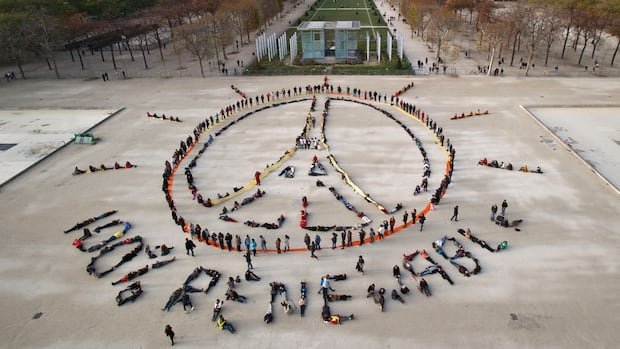
Environmental activists gathered near the Eiffel Tower during the COP21 UN climate summit in Paris in December 2015 to form a human chain symbolizing the peace sign and spelling out “100% renewable.” This event took place shortly before the signing of the landmark Paris Agreement, which marked the first universal commitment to combat climate change by nearly 200 countries.
Fast forward a decade, and these same nations will convene in Belem, Brazil, for COP30, the annual United Nations climate summit from November 10 to 21. Despite the Paris Agreement, atmospheric greenhouse gas levels and global temperatures have continued to rise significantly, setting record highs.
A comparison between the climate scenario in 2015 and today reveals a notable increase in average global temperatures, underscoring the urgency for climate action. The recent release of the 2025 UN Emissions Gap Report indicates a concerning projection of a 2.3-degree Celsius warming by 2100 if current climate commitments are not fully realized.
The escalation in global temperatures has tangible consequences, with the potential doubling of lethal hot days annually worldwide. The shift towards renewable energy sources has been a notable advancement over the past decade, with renewables surpassing coal as a primary electricity source, emphasizing the progress made in clean energy adoption.
The Paris Agreement has catalyzed significant changes in laws and regulations worldwide, driving the implementation of national policies promoting low-carbon technologies. Notably, countries like Canada have introduced initiatives such as carbon pricing and zero-emission vehicle mandates in alignment with the agreement.
Financial investments in green energy have surged, surpassing $2 trillion in 2024, with developed nations committing to support climate actions in developing countries. Despite these positive strides, challenges remain in meeting the Paris Agreement’s temperature goals, necessitating intensified efforts and innovative strategies to accelerate the global transition to a sustainable future.

