
Paleontologist Riley Black expressed little surprise upon discovering that numerous scientists in her field were mentioned in the Epstein files, shedding light on the extensive connections the late disgraced financier Jeffrey Epstein had with various individuals, including hundreds of scientists who continued to receive funding from him post his 2008 conviction. Notable figures in paleontology were among those impacted by these revelations, prompting discussions within the paleontology community about deeper issues of misogyny and power imbalances.
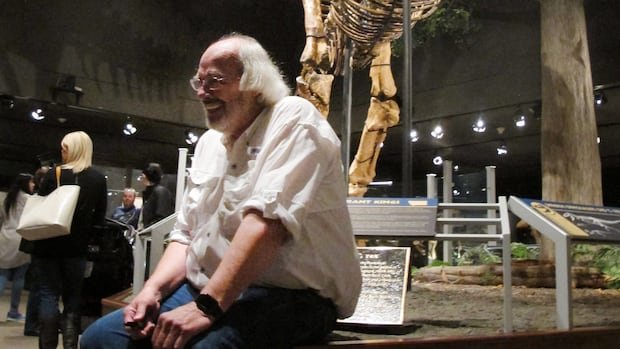
Epstein’s interest in evolutionary sciences and dinosaur fossils specifically had a profound impact within the paleontology realm, causing shockwaves. For instance, renowned dinosaur researcher Jack Horner faced consequences, with California’s Chapman University severing ties with him after revelations of seeking funding from Epstein and engaging in activities with the billionaire. Horner’s involvement with Epstein raised eyebrows, leading to further scrutiny within the scientific community.
Stuart Sumida, president of the Society of Vertebrate Paleontology, highlighted the allure of funding in the scientific field, noting that the availability of resources often attracts researchers, even if associated with controversial figures like Epstein. The Epstein files generated significant concern in the paleontology community, prompting organizations like SVP to acknowledge members mentioned in the documents and emphasize adherence to ethical standards.
Female paleontologists emphasized the broader issues of power dynamics, accountability, and safety in a male-dominated field, where instances of misconduct and harassment are prevalent. They cited challenges faced by women in navigating fieldwork environments and institutions that prioritize established male figures, discouraging reporting of misconduct. Efforts to address these issues, such as updating ethics codes and implementing reporting mechanisms, have been made to improve accountability and ensure a safer environment for all individuals in the field.
The need for accountability in cases of wrongdoing was underscored by the experiences of women in paleontology, who highlighted the lack of consequences for individuals like Nathan Myhrvold, a former Microsoft executive with ties to Epstein who continues to contribute to research in the field. While efforts to address misconduct have been made, ongoing challenges persist, impacting the professional experiences of women in paleontology and raising questions about the field’s future trajectory.

