
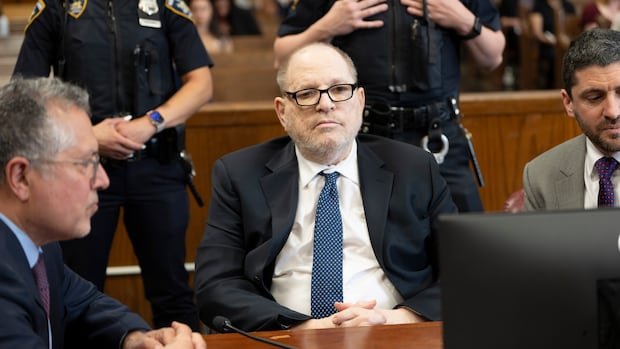
Harvey Weinstein’s retrial for rape concluded in a mistrial on Friday as the jury became deadlocked, mirroring a similar outcome from the previous year. Despite Weinstein’s incarceration for other sexual offenses, the New York rape charge remains unresolved after three trials. Amid the courtroom drama, Weinstein, in his wheelchair, maintained a stoic demeanor as he was escorted out by court officers.
The case centered on allegations by Jessica Mann, a hairstylist and actor, who accused Weinstein of raping her in 2013 during a tumultuous period in their relationship. The jury, predominantly male, deliberated extensively on whether the encounter was consensual, with Weinstein’s defense asserting that it was. The deadlock became apparent on the third day of deliberations when jurors indicated their inability to reach a unanimous decision, prompting Judge Curtis Farber to urge further deliberation.
Following hours of deliberation, the jury reiterated their impasse, with one juror disclosing that nine members sought acquittal while three favored conviction. Defense attorney Marc Agnifilo hailed the outcome as a victory for the judicial system, with a hearing scheduled for June 24 to determine the possibility of a fourth trial.
Weinstein, once a prominent figure in Hollywood and a significant donor to the Democratic Party, faced a dramatic fall from grace following the emergence of sexual misconduct allegations in 2017, which catalyzed the #MeToo movement. Despite previous convictions and acquittals, Mann’s accusation persisted, leading to a retrial in the current year.
Mann, now 40, recounted the harrowing incident where she claimed Weinstein blocked her attempts to leave, ultimately leading to her alleged assault. Her delayed disclosure of the event was scrutinized during the trial, raising questions about her credibility. The defense contended that Mann willingly engaged in a supportive relationship with Weinstein, only turning against him in the aftermath of his public disgrace.
The saga of Weinstein and Mann’s tumultuous relationship unfolded over years, with Mann oscillating between seeking Weinstein’s mentorship and distancing herself following the assault. The revelation of Mann’s alleged assault coincided with the #MeToo movement’s momentum, prompting her eventual decision to report the incident to the authorities.
Although Mann never pursued legal action against Weinstein, she received a substantial settlement from a sexual misconduct fund established during his company’s bankruptcy. The intricate details of their relationship, including financial assistance and emotional exchanges, were scrutinized during the trial, underscoring the complexity of the case.
In light of the mistrial, the possibility of a fourth trial looms, further prolonging the legal battle between Weinstein and his accuser. The outcome of this high-profile case underscores the enduring impact of the #MeToo movement and the challenges of seeking justice in cases of sexual violence.

