
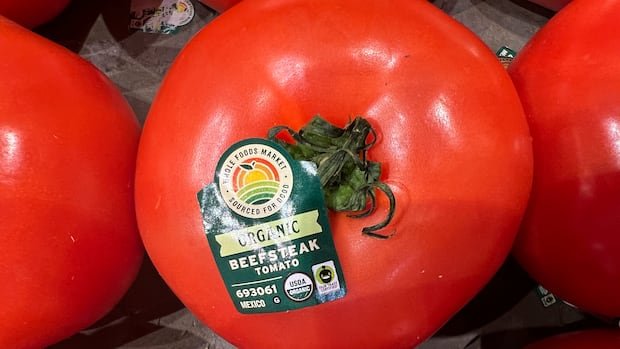
Tomatoes are currently carrying a hefty price tag. In May, tomato prices surged by 45.2%, marking the most substantial increase in a year for any grocery item tracked in the Consumer Price Index. This spike surpassed the usual suspects like coffee and beef by a significant margin.
Statistics Canada attributes this surge to supply constraints in Mexico, triggered by adverse weather conditions and reduced planting due to U.S. tariffs. While tomato prices in the U.S. dropped by 8.5% in May, the year-over-year increase was still notable at 32%.
Factors such as yield challenges in Mexico, tariffs, and transportation expenses continue to impact tomato prices in Canada, as highlighted by Michael von Massow, a food agriculture professor at the University of Guelph in Ontario. The demand for tomatoes typically rises in the summer, driven by consumer habits of adding them to salads and barbeque dishes.
The tomato market has been affected by various factors, including weather disruptions, tariffs, and supply chain challenges. Issues such as a freeze in Florida, rainfall in Mexico, and reduced plantings due to U.S. tariffs on Mexican tomatoes have contributed to the current situation. Additionally, elevated costs of diesel, fertilizers, and transportation, stemming from the conflict in Iran, have further exacerbated the pricing scenario for fresh produce.
The average price of fresh tomatoes stood at $6.18 per kilogram in April, up by $1.49 compared to the previous year. Recent data indicates a slight price drop to $6.61 per kilogram in Canadian grocery stores. Experts predict a potential easing of prices as Canadian tomato production is set to begin in the coming weeks.
Consumers looking to save on grocery bills are advised to consider seasonal produce options. By opting for in-season fruits and vegetables, individuals can leverage lower prices as Canadian production ramps up. Asparagus, strawberries, and radishes are highlighted as cost-effective alternatives to tomatoes.
Despite the recent price fluctuations, there are indications that the worst may be over for tomato prices. While still relatively high compared to previous years, the market is expected to stabilize as domestic production picks up.

