
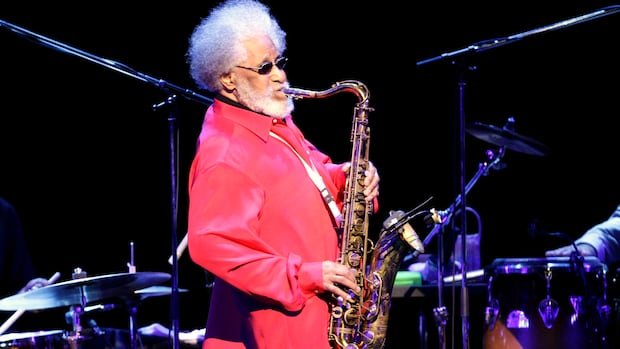
Sonny Rollins, the innovative tenor saxophonist known for his unique sound and continuous musical exploration in the jazz scene for over five decades, passed away at the age of 95 on Monday. Rollins died at his residence in Woodstock, N.Y., as confirmed by spokesperson Terri Hinte to The Associated Press. Although the cause of his death was not specified, it was mentioned that he had been facing various health issues that kept him mostly confined to his home in recent years.
Rollins, from his early days as a prodigious teenager to his later groundbreaking solo performances and ventures into free jazz, was celebrated for his improvisational prowess. He stood out as one of the remaining luminaries of the bebop era and ranked among the most influential saxophonists of his generation, alongside John Coltrane and Charlie Parker.
Fans of rock music were introduced to Rollins’ talent through the Rolling Stones’ album “Tattoo You” in 1981, which featured his soulful saxophone solo on the track “Waiting on a Friend,” inspired by Mick Jagger’s dance moves.
Despite his enduring popularity, Rollins was never content with his artistry, occasionally taking extended breaks from performing and consistently exploring diverse musical styles. He often described himself as a perpetual “work in progress,” emphasizing his reluctance to settle into a fixed musical approach.
Rollins, in the 1990s and 2000s, released a series of highly acclaimed albums, maintained a disciplined practice routine, and continued to tour well into his 80s. However, his battle with pulmonary fibrosis eventually led to his retirement. His final concert was in 2012, and he ceased performing altogether in 2014.
One of Rollins’ notable achievements was winning a Grammy award for Best Jazz Instrumental Album with his 2001 release “This is What I Do.” He later clinched another Grammy in 2006 for Best Jazz Instrumental Solo for his performance on “Why Was I Born?” from the live album “Without a Song: The 9/11 Concert.”
Rollins’ iconic journey in the jazz world was marked by personal struggles, including a period of heroin addiction in his youth, which led to jail time and living on the streets. However, a transformative experience during his recovery propelled him towards a deeper understanding of life and a renewed commitment to his music.
Throughout his career, Rollins’ musical evolution encompassed various styles and innovations, reflecting his relentless pursuit of artistic integrity over commercial success. His contributions to jazz music earned him widespread acclaim and solidified his status as a living legend in the industry.
Sonny Rollins, born on September 7, 1930, in Harlem, was raised in a musical environment that nurtured his passion for the saxophone. Despite facing initial challenges in his musical education, Rollins quickly rose to prominence as a self-taught prodigy, captivating audiences with his tenor saxophone prowess.
As Rollins leaves behind a legacy of unreleased recordings, he expressed his lack of concern for their posthumous fate, emphasizing his focus on creating music without the burden of worrying about its future preservation.

