
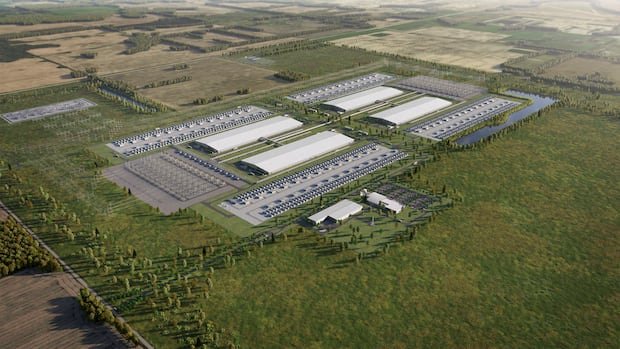
New York took a groundbreaking step this week by halting the construction of large data centers, making it the first state in the U.S. to do so. Governor Kathy Hochul, a Democrat, emphasized the need to lead by example and issued an executive order putting a one-year hold on issuing new permits for hyperscale data centers.
This decision has thrust New York into a broader discussion on the regulation of massive data centers that power artificial intelligence. Similar concerns have arisen in Canada as companies seek to expand their data center presence, prompting some communities to question the strain these facilities put on local power grids and water resources.
Hamilton, Ontario, was considering a similar moratorium, but the city council rejected the proposal. Anne Pasek, an associate professor at Trent University specializing in data centers, expressed concerns about the lack of adequate public consultation in approving many data center projects.
Hyperscale data centers, which serve as the backbone for cloud computing and AI applications, have come under scrutiny for their significant energy consumption. With about 20% of data center energy dedicated to AI processing, the environmental impact of these facilities is a growing concern.
The expansion of AI technologies has led to a surge in data center infrastructure investment, with companies pouring billions of dollars into building and upgrading facilities. This rapid growth has raised alarms about the industry’s carbon footprint and resource consumption.
Data centers are not only energy-intensive but also water-intensive, using large volumes of water for cooling purposes. While some facilities employ energy-efficient cooling methods, the reliance on freshwater and potential strain on local water resources remain key issues.
The clustering of data centers in certain regions has raised community concerns about noise pollution, air quality, and overall environmental impact. As the demand for computing power continues to rise, the industry faces challenges in managing its energy and water consumption effectively.
Despite the environmental challenges, the data center industry continues to expand, with Canada emerging as an attractive destination due to its affordable electricity rates. Meta, for instance, announced plans to build a massive data center near Edmonton, reflecting the country’s growing importance in the global data infrastructure landscape.
While New York’s move to pause data center development sets a precedent, other provinces and territories in Canada have not indicated plans to follow suit with moratoriums. Each region is evaluating data center projects based on their individual merits and considering the potential impact on energy, water resources, and local communities.

