
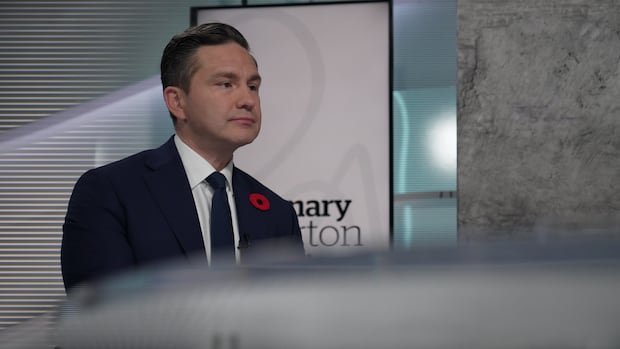
Conservative Leader Pierre Poilievre has expressed his intention to utilize the notwithstanding clause if elected to reverse the recent Supreme Court ruling that invalidated mandatory minimums for possessing or accessing child pornography. The ruling, which saw a 5-4 split among the judges, has sparked immediate criticism from both provincial and federal officials.
In an interview with CBC News, Poilievre voiced his disagreement with the ruling, stating, “This ruling is wrong-headed, and I would oppose it and use the notwithstanding clause to overturn it.” He further emphasized his commitment to introducing mandatory prison sentences for individuals found in possession of child pornography to ensure severe penalties for offenders.
The notwithstanding clause, also known as Section 33 of the Charter, allows provincial or federal legislation to override specific Charter rights for a limited period of five years. The Supreme Court’s decision stemmed from an appeal in Quebec involving two separate cases related to child pornography offenses, where the mandatory minimum sentences faced challenges for potentially leading to disproportionately harsh punishments.
Justice Mary Moreau, writing for the majority, highlighted the varying circumstances surrounding the possession or access to child pornography, ranging from organized offenders with extensive collections to young individuals inadvertently viewing such content. Poilievre criticized the Court for basing its decision on hypothetical scenarios and advocated for harsher penalties for offenders.
The dissenting voices, including justices Richard Wagner and Suzanne Côté, expressed their support for more stringent sentences in cases of sexual offenses against minors. Ontario Premier Doug Ford and Alberta Premier Danielle Smith joined the calls for invoking the notwithstanding clause to ensure severe consequences for those involved in child pornography.
The decision by the Supreme Court, which marks another instance of mandatory minimums being struck down, has drawn attention to the ongoing debate over the constitutionality of such sentencing practices. The Canadian Centre for Child Protection, acting as an intervenor in the case, highlighted the significance of the ruling in recognizing the prevalence of child sexual abuse material and its profound impact on victims and communities.
As discussions continue regarding the implications of the ruling, officials are considering the next steps in addressing crimes that exploit children and ensuring that perpetrators face appropriate consequences within the legal framework.

