
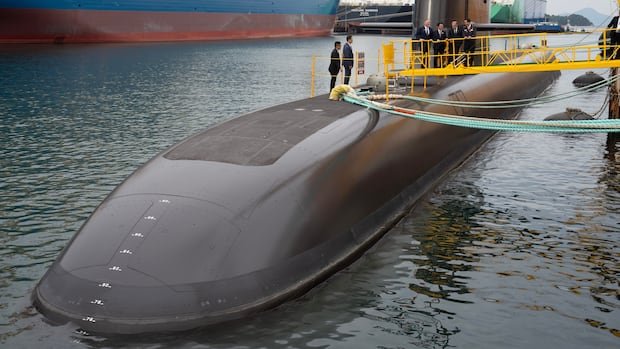
South Korea boosted its efforts to sell submarines to Canada, with Prime Minister Mark Carney visiting a shipyard to inspect one of the newly built boats. Accompanied by South Korea’s Prime Minister Kim Min-seok, Carney toured the Hanwha Ocean Ltd. facility in Geoje, located 96 kilometers from the APEC summit venue in Gyeongju. The shipyard, in partnership with Hyundai Heavy Industries, aggressively pitched the KSS-III (Batch 2) submarine to Canada with an unsolicited proposal submitted before the last election.
During the visit, a recently launched South Korean navy submarine, intended for Canada, proudly displayed a Canadian flag while another under construction featured Korean and Canadian banners. This symbolic gesture aimed to showcase the active production lines and the commitment to deliver four submarines to Canada by 2035, aligning with the navy’s plan to retire the aging Victoria-class submarines.
Accompanied by Defence Minister David McGuinty and Vice-Admiral Angus Topshee, Carney expressed admiration for the submarine’s design and features, particularly praising its crew accommodations and combat information center. The visit signaled the government’s readiness to expedite the decision-making process, potentially finalizing the submarine contract next year.
Following a visit to Germany in August to assess submarine builders, Carney narrowed down the options to Hanwha Ocean and ThyssenKrupp Marine Systems (TKMS) of Kiel. While the German bid offers a longer timeline for submarine delivery, Canada’s preference will prioritize job creation. Despite suggestions to involve Canadian shipyards in the submarine construction, officials emphasized the complexity of establishing such facilities.
Both the South Korean and German submarine proposals meet navy requirements, but the project’s budget remains unconfirmed. Defence planners are refining cost estimates, with the government aiming to align defense spending with NATO targets. The tour coincided with a Parliamentary Budget Office report highlighting past defense equipment underspending, underscoring challenges in meeting future procurement goals.
The analysis emphasized concerns about managing increased procurement activities and industry support in achieving the NATO defense spending target of five percent of GDP. The report raises doubts about the government’s capacity to handle the planned spending surge effectively.

