
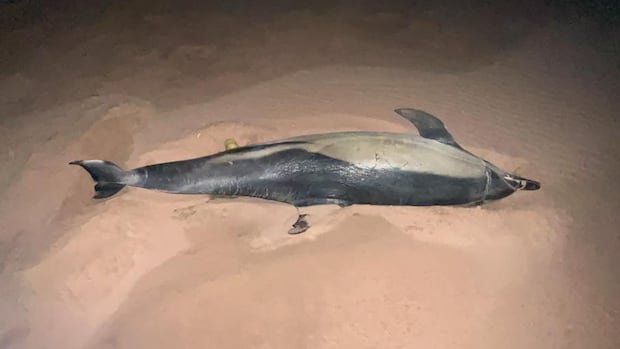
A dolphin found stranded on Blooming Point Beach in October underwent a necropsy which revealed a severe infestation of lungworms causing pneumonia, hindering its ability to breathe. Tonya Wimmer, from the Marine Animal Response Society, reported that the dolphin, initially perceived to be in good condition, was struggling to breathe when officials arrived after receiving a call on October 10, 2025.
Due to late hours, windy weather, and safety concerns, officials decided to reassess the situation the following morning, but the dolphin had succumbed before that. The carcass was then taken for examination to determine the cause of stranding.
Veterinarians discovered the dolphin also had trematodes, or flatworms, in its ears, which may have contributed to disorientation and subsequent stranding. Wimmer highlighted the importance of prompt response to stranded wildlife, emphasizing the significance of understanding and addressing such incidents to aid in conservation efforts.
The discovery of the ailing dolphin serves as a reminder of the vulnerability of wildlife and the impact of parasitic infestations on their health. Wimmer expressed appreciation for the public’s concern and compassion towards animals in distress, underscoring the need for vigilance and care when encountering similar situations in the future.

