
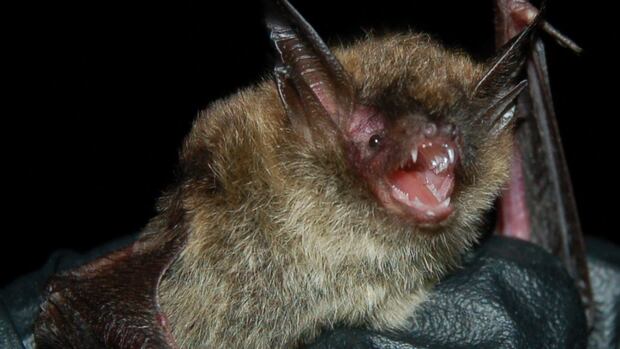
While many individuals tend to steer clear of bats, a local environmental organization in Sudbury is aiming to transform that apprehension into curiosity by researching the area’s bat population.
This past weekend, the Junction Creek Stewardship Committee organized what they referred to as a “bat walk” at Park Lawn Cemetery, encouraging community members to participate in the quest for these nocturnal creatures.
Because bats are primarily active during the night and can be challenging to spot, participants utilized iPads equipped with echometers to detect the high-frequency sounds emitted by bats using echolocation.
“There is significant interest in bats within the Sudbury region,” stated Evan Voutier, an ecological technician working with the committee.
“We have come to understand that there is limited research on bats in our locality. Therefore, we are making an effort to contribute to this research while also engaging the public and demonstrating our methodologies.”
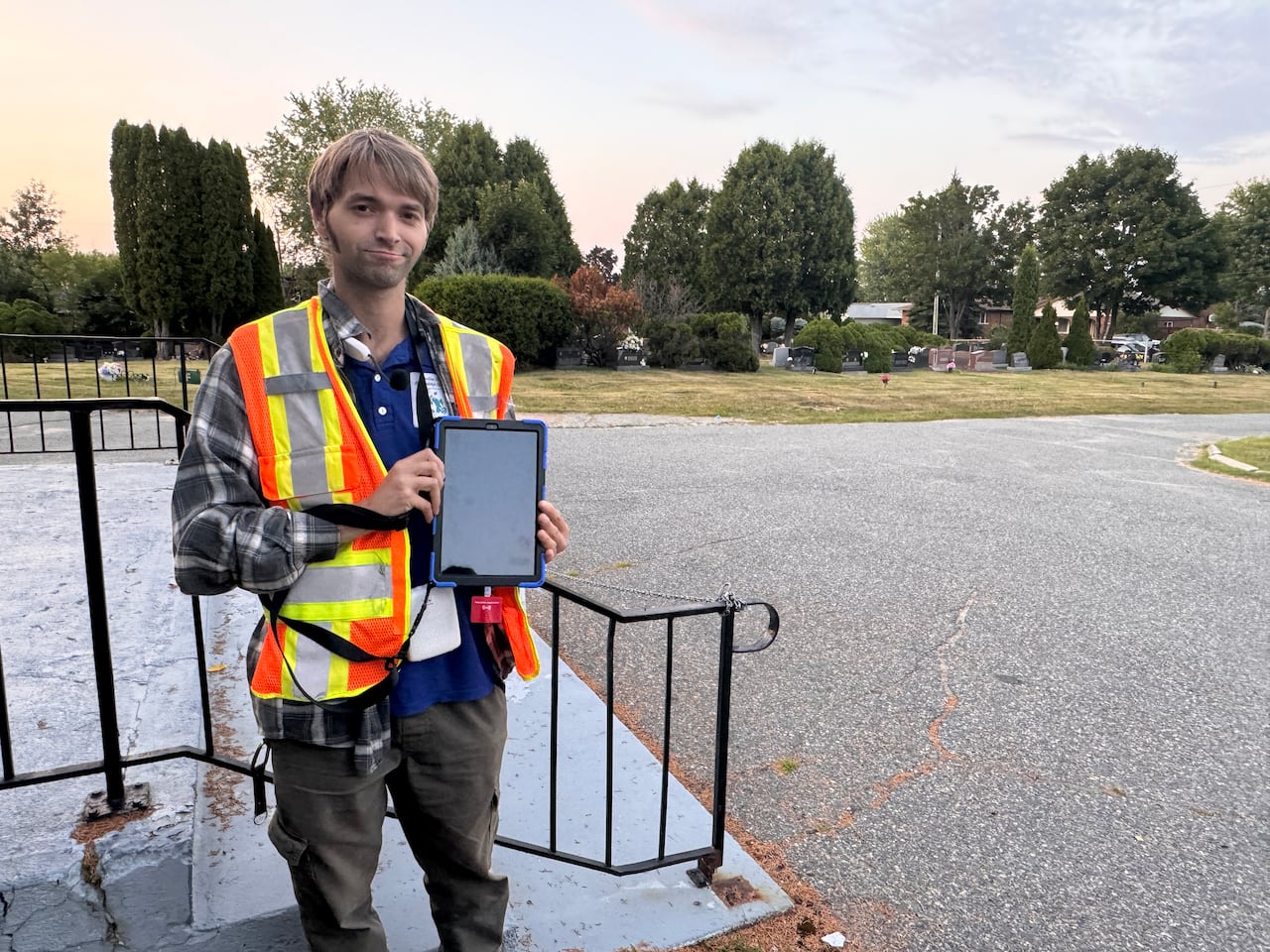
Evan Voutier, an ecological technician with the Junction Creek Stewardship Committee, is seen holding an echometer attached to an iPad. (Faith Greco/CBC)
The Junction Creek Stewardship Committee is investigating how bats utilize various habitats across Greater Sudbury.
“We are not solely concentrating on optimal habitats that are likely to support large bat populations, but also on areas with some habitat disturbances to examine the impacts and the species of bats found in those locations compared to others,” Voutier explained.
Abandoned mines, which are prevalent in northern Ontario, serve as significant hibernation sites for certain bat species during the winter months.
Declining Bat Populations
Franco Mariotti, a biologist and naturalist volunteering with the group, emphasized the importance of increasing knowledge about local bats, especially as they face ongoing threats.
“Bats are endangered due to the white-nose syndrome fungus that is decimating their numbers,” he noted.
White-nose syndrome, a fungal infection affecting hibernating bats, has led to significant reductions in bat populations throughout North America. It causes bats to awaken too frequently during hibernation, depleting their stored energy and often leading to starvation before spring arrives.
Certain species also face dangers from wind turbines. The rapid fluctuations in air pressure surrounding rotating turbine blades can create gas bubbles in bodily fluids, akin to decompression sickness, often called “the bends.” Mariotti explained that this results in severe internal injuries and frequently leads to death.
Despite the declining numbers, he mentioned that the committee’s research has indicated that bats can still be found throughout the Sudbury region.

Franco Mariotti, a biologist and naturalist, is a volunteer and founding member of the Junction Creek Stewardship Committee. (Faith Greco/CBC)
“Of the eight bat species in Ontario, we have identified all eight within Junction Creek,” he stated.
“This finding over the past year is remarkable. All species of bats in Ontario can be found right here in downtown Sudbury.”
He noted the vital ecological role bats play as primary predators of insects, which aids in managing agricultural and forest pests.
Mariotti expressed his hope that the public “bat walks” will alter perceptions of these creatures.
“Bats are among those exceptional animals that captivate and inspire wonder about the natural world,” he remarked.
The Junction Creek Stewardship Committee plans to host another public “bat walk” on August 19.

