
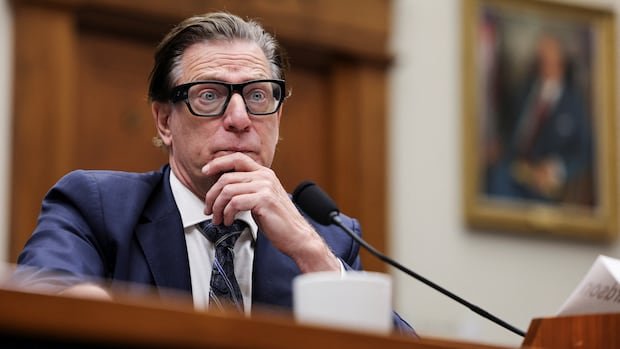
The head of the U.S. Federal Emergency Management Agency (FEMA) who was serving in an acting capacity has stepped down from his position after a short tenure of six months, as confirmed by the U.S. Department of Homeland Security (DHS). This development adds to a series of significant changes within the agency this year, including staff turnover, program reductions, and policy shifts related to federal disaster response.
David Richardson, who assumed the role following the departure of Cameron Hamilton in May, faced criticism for his management of the Texas floods earlier this year, leading to his resignation. While the DHS did not provide specifics on the reasons behind his exit, an anonymous FEMA employee disclosed to The Associated Press that Richardson had resigned.
In acknowledging Richardson’s service, a DHS spokesperson expressed gratitude for his dedication and wished him success in his future endeavors. Richardson, a former U.S. marine officer with experience in Iraq and Afghanistan, as well as leading the DHS Countering Weapons of Mass Destruction Office, lacked prior emergency management background when he took on the acting FEMA chief role.
Upon succeeding Hamilton, who was dismissed after expressing opposition to the elimination of FEMA, Richardson pledged to support President Donald Trump’s directive to decentralize disaster recovery responsibilities to the states. He also asserted his determination to overcome any internal resistance hindering this objective.
However, concerns arose regarding Richardson’s leadership effectiveness, with lawmakers and FEMA personnel questioning his actions. His delayed on-site response to the deadly Texas floods raised eyebrows, as he cited efforts to address bureaucratic hurdles and initial involvement from his vehicle during the crisis.
Secretary of Homeland Security Kristi Noem imposed stringent oversight on FEMA programs and expenditures, requiring personal approval for expenses exceeding $100,000 USD. Despite reports suggesting a slowdown in FEMA’s Texas response due to the approval process, Richardson refuted such claims.
Karen Evans, FEMA’s chief of staff and former cybersecurity official, is set to assume the FEMA administrator role on December 1, mandated by law to possess emergency management expertise. Notably, the Trump administration has bypassed this requirement by appointing temporary leaders thus far.
Under Trump’s administration, FEMA has witnessed significant transformations since January, with intentions to revamp or potentially dismantle the agency. Notably, a substantial percentage of permanent employees, including senior staff, departed by mid-year, reflecting the agency’s evolving landscape.
Mitigation funding cuts, preparedness grant conditions aligned with Trump’s immigration policies, and denials of major disaster declarations to certain states are among the administration’s policy shifts. The fate of Richardson’s leadership in the Countering Weapons of Mass Destruction Office remains uncertain.
To review and revamp FEMA operations, Trump established a 12-member council led by Noem and Defence Secretary Pete Hegseth, tasked with recommending reforms to enhance state responsibilities in disaster preparedness, response, and recovery. The council is expected to deliver its proposals by December.

