
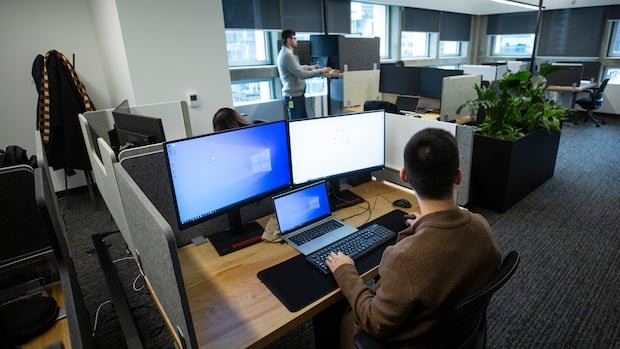
A recent study suggests that the push for employees to return to the office full time may be driven more by leaders’ desire for power and status rather than productivity. The research, conducted by scholars at the Wharton School at the University of Pennsylvania, indicates that leaders with strong narcissistic traits are less likely to support remote work arrangements.
The study employed various methods to explore why some leaders resist remote work while others embrace it. Analyzing public company reports, personality surveys, and conducting an online experiment revealed a link between leaders’ narcissism and their aversion to remote work. The findings suggest that leaders with narcissistic tendencies view in-person work as a means to assert control and command respect from their employees.
According to Sylvia Fuller, a sociology professor at the University of British Columbia, the study sheds light on leaders’ personal motivations for pushing for a full return to the office. Fuller emphasizes that leaders may be driven by personal desires rather than the organization’s best interests.
Contrary to the perceived benefits of in-office work, existing research indicates that remote work does not hinder productivity. Statistics Canada data shows a 3.7% increase in labor productivity between 2019 and 2021, despite a rise in remote work due to the COVID-19 pandemic. Additionally, the 2022 Time Use Survey found no significant difference in paid work hours between office and teleworking employees.
While some argue for the benefits of in-person collaboration, HR consultant Cissy Pau suggests that employers’ push for office returns extends beyond productivity concerns. Pau highlights the importance of face-to-face communication and fostering a sense of community among employees. She notes that physical presence facilitates spontaneous interactions and deeper connections that may be lacking in remote work setups.

