
On Wednesday, Conservative Leader Pierre Poilievre stated that he is not contemplating any changes to his leadership style following the announcement from two MPs that they would be leaving his caucus. One of the departing members attributed his decision to Poilievre’s “negative” political approach.
During his initial news conference since the departures took place last week, Poilievre, speaking to journalists in Calgary, referenced a previous anti-Liberal remark made by Nova Scotia MP Chris d’Entremont, who switched allegiance to the Liberals. This occurred when he was questioned about the issues within the Conservative caucus.
When a reporter inquired whether the two exits reflected on his leadership or caused him to reconsider his leadership approach, Poilievre responded with a firm “no.”
“My objective is to keep leading and to be the sole leader advocating for a Canada where hardworking individuals can afford a home and food. That is my focus,” he asserted.
In response to d’Entremont’s claims that the party operates more like “a frat house” than “a serious political party,” Poilievre referred to the MP’s statement made in the House of Commons regarding inflation on food prices attributed to the Liberals.
Conservative Leader Pierre Poilievre addressed the departure of two Conservative MPs for the first time at a news conference, saying he’s not changing his approach after floor-crossing MP Chris d’Entremont cited his leadership style as the reason he defected to the Liberals.
In a recent interview with CBC News, d’Entremont accused two senior Conservative members of barging into his office, shouting at him, and referring to him as “a snake” upon learning of his considerations to switch to the Liberals — behavior he claimed “sealed the deal” for his departure from the party.
The MPs involved, Conservative House leader Andrew Scheer and the party’s whip Chris Warkentin, acknowledged that the term “snake” was indeed used during their interaction but insisted they had approached his office “calmly” and communicated in a “measured voice.”
A representative for Poilievre labeled d’Entremont as a “liar,” suggesting he would fit in well with other “lying Liberals.”
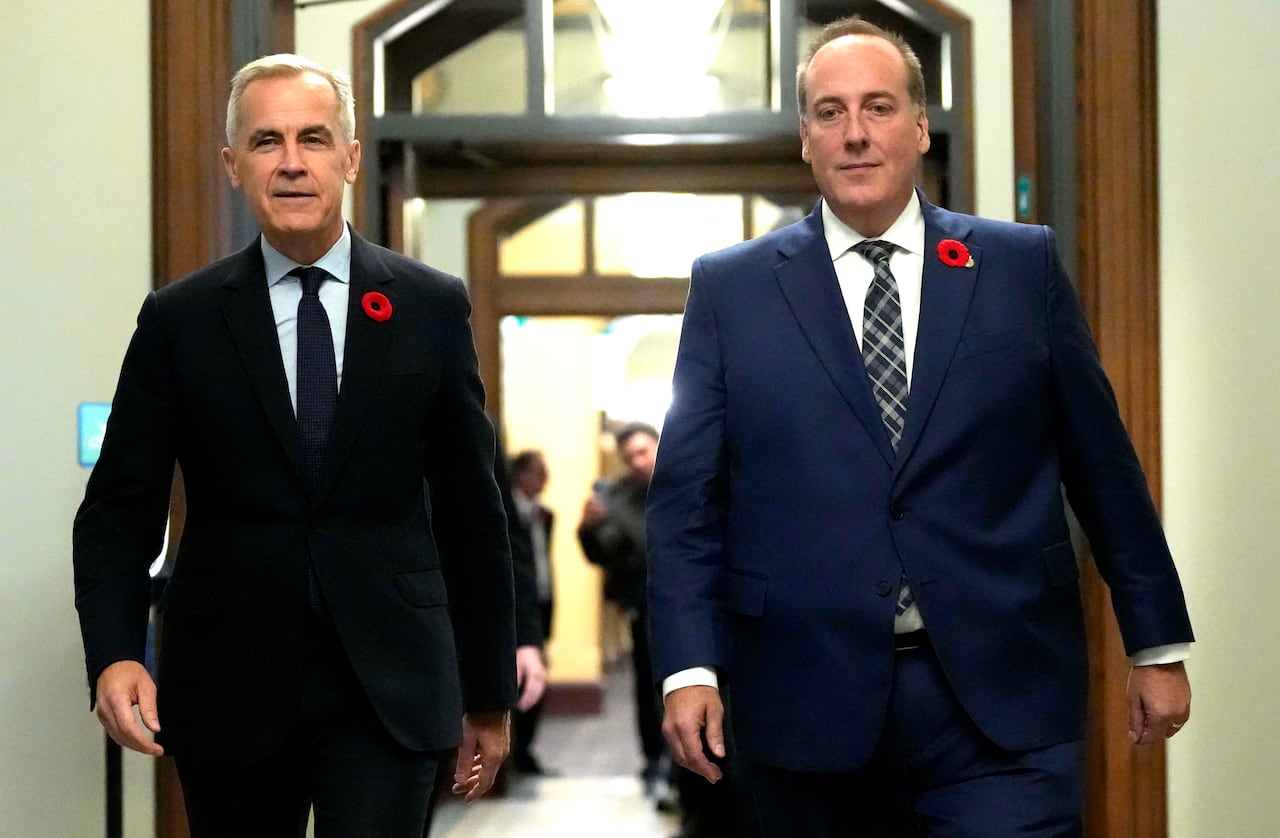
Prime Minister Mark Carney, left, walks with Nova Scotia MP Chris d’Entremont, who crossed the floor from the Conservatives to join the Liberals, on Parliament Hill in Ottawa on Nov. 5. (Justin Tang/The Canadian Press)
Poilievre pointed out that just a month ago, d’Entremont was expressing concerns in the House of Commons about how “the cost of living has skyrocketed” during the past six years under Liberal governance.
In a statement from September 25, d’Entremont described food price inflation as “inhumane” and advocated for the elimination of the government’s industrial carbon tax, emphasizing that “it is not just policy, it is survival. We need affordable food,” while specifically calling for the tax to be removed from fertilizer and agricultural equipment.
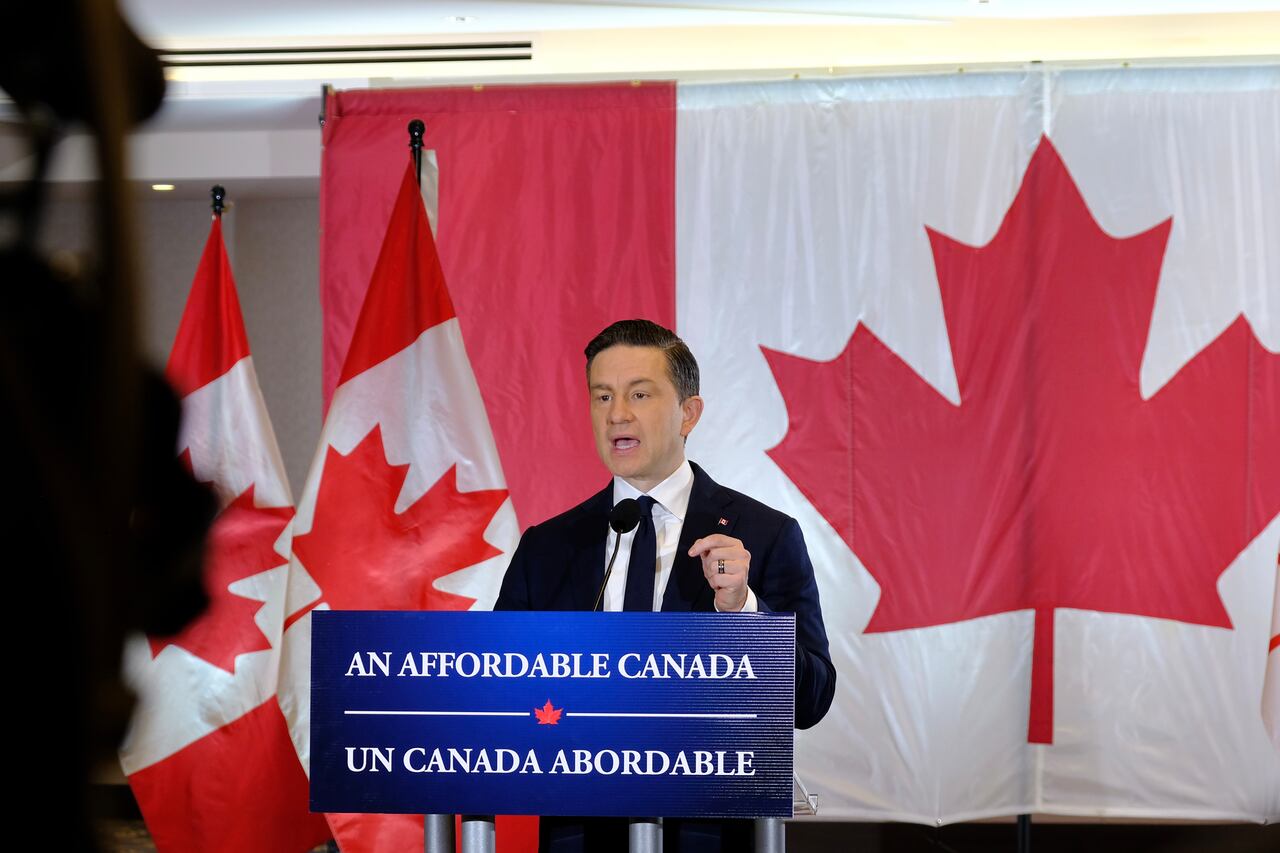
Conservative Leader Pierre Poilievre holds a news conference at a hotel in Calgary on Wednesday, Nov. 12, 2025. (Joshua McLean/CBC News)
Despite Prime Minister Mark Carney’s commitment to maintaining that tax after abolishing the consumer carbon levy, d’Entremont still chose to join the Liberals.
When asked to respond to Poilievre’s criticism, d’Entremont stated in a message to CBC News: “They [the Conservatives] are twisting the narrative. I have expressed my views clearly. He continues to validate my argument!”
Just two days after d’Entremont’s switch, Conservative MP Matt Jeneroux, who was also rumored to be contemplating a similar defection, announced that he is stepping away from politics altogether in the upcoming year.
The recent departures, which insiders claim have caused alarm within the Conservative Party, have provided the minority Liberal government with additional leeway to advance its agenda in Parliament. This situation also brings the Liberals closer to achieving a majority in the House of Commons.
During a tense interaction with a reporter, Poilievre remarked that the media should pay more attention to Liberal MP Nathaniel Erskine-Smith’s critical remarks concerning certain elements of the government’s latest budget.
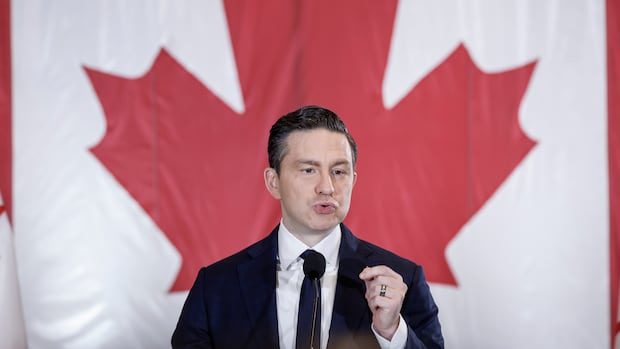
Conservative party leader Pierre Poilievre spoke to reporters for the first time since two MPs announced their departures last week following the tabling of budget 2025.
“Expectations were set at a level we failed to meet,” Erskine-Smith indicated in a social media video, expressing disappointment that the recent budget did not allocate sufficient funds for climate initiatives and housing. “It is far from the wartime effort many of us anticipated.”
“I anticipate there will be extensive coverage of this turmoil,” Poilievre remarked with sarcasm.

