
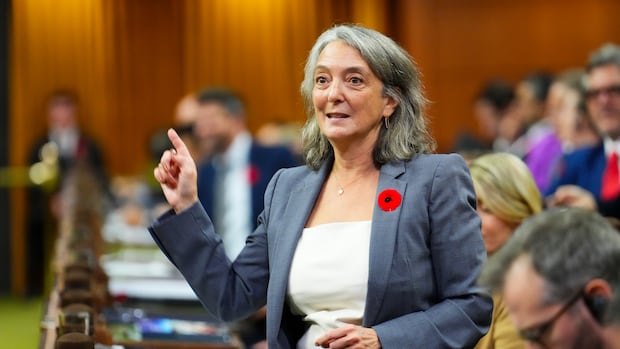
The newly appointed environment minister of Canada, along with officials from Environment and Climate Change, has affirmed the federal government’s commitment to the national climate objectives established during Justin Trudeau’s leadership.
Environment and Climate Change Minister Julie Dabrusin was questioned multiple times regarding whether the current Liberal administration remains dedicated to achieving the immediate targets set by the former prime minister, especially the emissions target for 2035.
Canada has pledged to cut greenhouse gas emissions by at least 45 percent compared to 2005 levels by that date.
“Our targets are unchanged. We have always acknowledged that they are ambitious, right? So it was expected to be a challenge. But that’s the essence of setting ambitious targets — it compels us to strive further,” Dabrusin recently shared on the CBC’s environment and climate change podcast, What on Earth.
When further asked if the Carney administration adheres to the previous government’s emissions reduction goal, the minister replied, “Exactly. Those are our national targets.”
Can Canada balance the fight against climate change with fossil fuel extraction? That seems to be the objective in Prime Minister Mark Carney’s initial budget. However, Climate Minister Julie Dabrusin asserts that Canada still holds credibility in the effort to reduce emissions as she prepares for the UN climate conference in Brazil. Additionally, we explore the implications as global leaders convene in the Amazon rainforest for COP30, along with what climate leadership might entail in 2025.
Prime Minister Mark Carney also reaffirmed his support for these targets on Monday when he introduced his “Buy Canadian Plan.”
These statements represent the first significant occasion where Carney and his environment minister have publicly endorsed Canada’s current climate objectives.
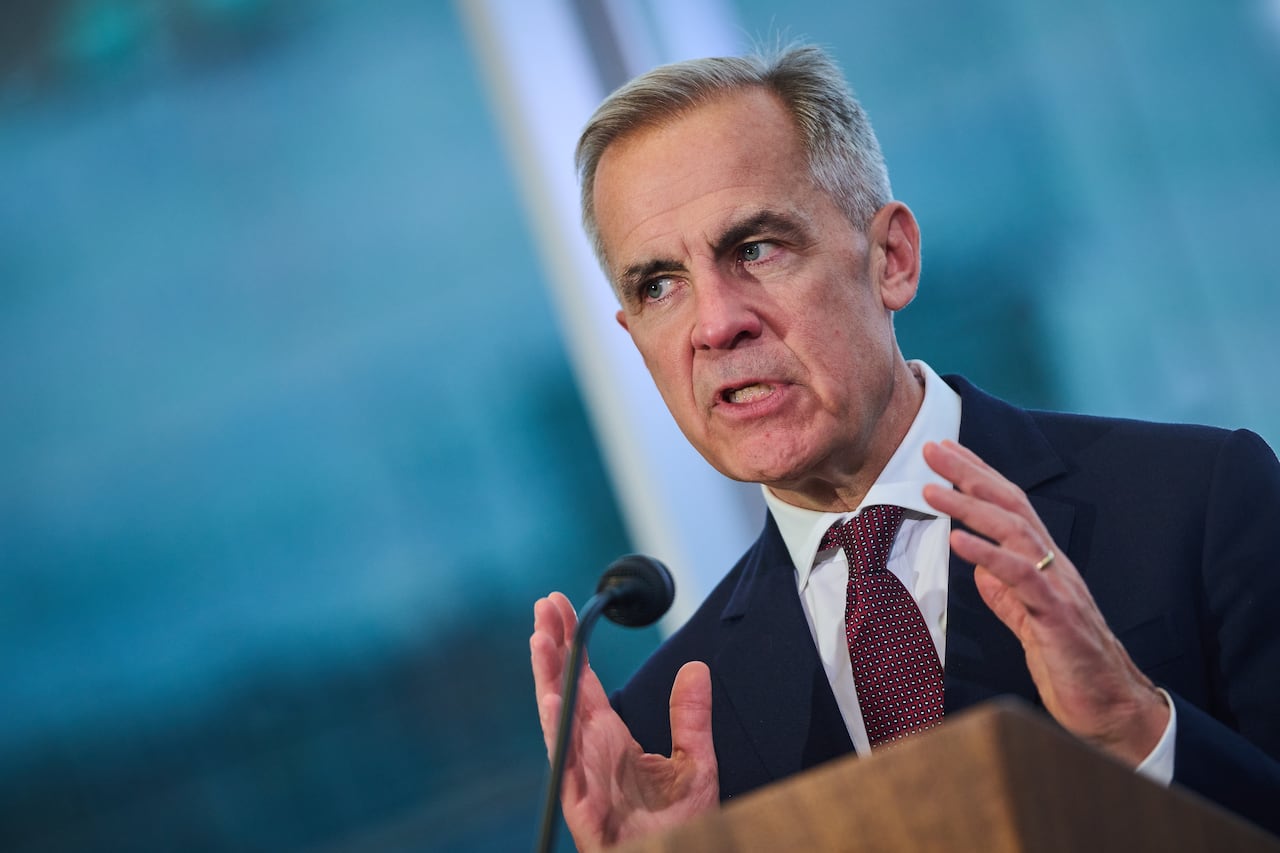
Prime Minister Mark Carney addresses attendees at the Vector artificial intelligence research institute in Toronto on Friday. (Sammy Kogan/The Canadian Press)
In earlier inquiries, both Dabrusin and Carney provided ambiguous responses, and their recent Climate Competitiveness Strategy did not mention the targets. The omission of the short-term target raised concerns that Canada might be stepping back from its climate commitments.
On Friday, representatives from Environment and Climate Change Canada conducted a media briefing prior to the UN Climate summit, COP 30, currently taking place in Brazil. The officials spoke on background, and journalists could not attribute the comments to specific individuals, but they echoed the government’s stance.
One official mentioned that the 2035 target — initially announced in December, shortly before Trudeau’s resignation — was submitted to the United Nations, with the statement, “we [the government] stand by that.”
“I believe the government has clearly indicated that this is a pathway, and that the commitment to achieve net-zero by 2050 is the overarching goal. We are working towards that,” the official conveyed to the media.
Climate targets seen as progress indicators
Climate targets are frequently perceived as binary pass or fail metrics; however, climate scientists and policymakers are increasingly advocating for a more nuanced perspective, suggesting that any progress is preferable to stagnation.
This message was highlighted in a recent report from the Canadian Climate Institute, which concluded that Canada is likely to miss its 2030 climate objectives but emphasized that the findings should be regarded as guideposts to help countries adjust their strategies.
This year’s COP 30 summit marks ten years since nations agreed to the significant 2015 Paris Agreement. Through this treaty, countries committed to keeping global temperature rise to “well below” 2 C above pre-industrial levels while aiming for a limit of 1.5 C.
An official from Environment and Climate Change Canada pointed out that nearly 200 countries, including Canada, have submitted updated national climate plans, which, if fully realized, would lower the anticipated increase in global temperatures from 4 C to below 3 C.
While this falls short of the Paris Agreement’s targets and carries significant repercussions, it keeps the possibility of progress within sight.

