
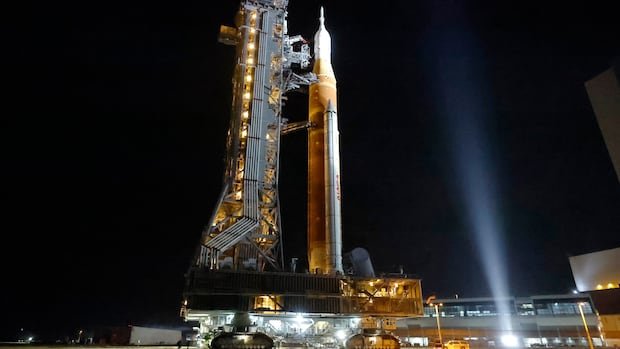
Four astronauts, including Jeremy Hansen from the Canadian Space Agency, are set to embark on a journey around the moon in NASA’s Artemis II lunar mission. The spacecraft is expected to launch from the Kennedy Space Center after facing delays due to technical issues. The crew, which also consists of veteran NASA astronauts Reid Wiseman, Victor Glover, and Christina Koch, has undergone rigorous training for the mission.
David Saint-Jacques, deputy director of the lunar exploration program at CSA, highlighted that the crew will travel further than any humans have gone before. This mission serves as a test flight to gather insights for future deep space travels. The astronauts will spend nearly 10 days in the Orion capsule during their one million-kilometer journey to orbit the moon and return.
The Orion capsule, comparable in size to a minivan or SUV, offers about 9.3 cubic meters of space. Despite the compact quarters, the crew had input in designing the spacecraft to optimize functionality. Sleeping arrangements include hammock-like sleeping bags, and astronauts will stick to a strict daily routine to ensure rest is prioritized.
Meal options onboard consist of freeze-dried meals tailored to individual preferences. Water supply is limited, with each crew member having a set daily allotment for consumption. Waste management on the spacecraft is basic compared to the ISS, with waste being stored and brought back to Earth.
Maintaining physical and mental health is crucial during the mission. The crew will utilize a flywheel for exercises to counter bone density loss in zero gravity. Medical supplies are stocked onboard, and mental well-being is supported by teamwork and camaraderie among the crew members who have trained together extensively.
Overall, the Artemis II mission represents a significant step in human space exploration, paving the way for future missions to explore deep space.

