
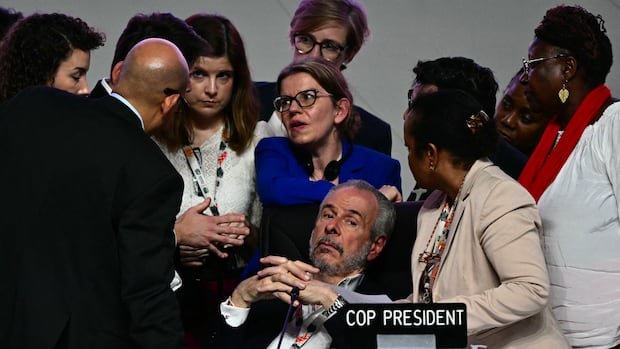
Brazil successfully led COP30 negotiations to a compromise climate deal aimed at increasing financial support for developing countries dealing with climate change impacts. Notably, the agreement did not address the role of fossil fuels in driving global warming. Despite the absence of the United States at the official delegation, Brazil emphasized global unity in addressing climate challenges.
The intense two-week negotiations in Belém revealed divisions on future climate action strategies. While some countries expressed dissatisfaction with the deal’s lack of stringent measures on greenhouse gas emissions and fossil fuels, others, including Colombia, Panama, and Uruguay, objected to the omission of fossil fuel transition language in the agreement.
Following overnight deliberations, the European Union agreed to the final deal despite reservations, emphasizing the importance of moving in the right direction. However, Panama criticized the deal for not explicitly mentioning fossil fuels, labeling it complicit rather than neutral.
The accord also introduced a voluntary initiative to accelerate climate action and called on wealthy nations to triple financial aid to developing countries by 2035. Developing nations stressed the urgent need for funds to mitigate existing climate impacts like sea-level rise and extreme weather events.
Although the deal focused on financial assistance, some countries, including Sierra Leone, raised concerns over ambiguous indicators for measuring climate impacts. The EU and Arab nations’ disagreement over fossil fuels prolonged negotiations, culminating in a separate text on fossil fuels and forest protection due to the lack of consensus.
Despite the challenges, COP30’s president encouraged ongoing discussions on climate issues. The agreement also initiated a review process to align international trade with climate goals, addressing concerns about trade barriers hindering the adoption of clean technologies.

