
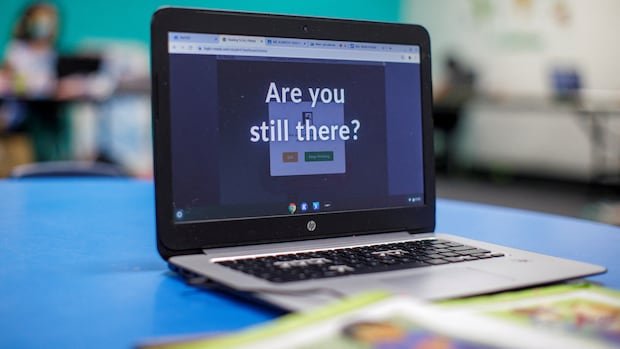
A school day envisioned with students utilizing AI-driven apps for a few hours to learn core subjects independently, while dedicating more time to life skills, excursions, and personal projects is being considered by Canadian education experts. This model, championed by the American private school network Alpha School, combines traditional learning methods with innovative AI technology. While it may suit certain students, concerns such as student privacy, well-being, and the actual content of learning materials need to be carefully addressed.
Alpha School’s approach has attracted attention for its promise to transform traditional education. By condensing academic subjects into intense daily sessions and emphasizing hands-on learning and life skills development, the school claims to boost student achievement. The model, resembling homeschooling and certain alternative education systems, involves online platforms focusing on mastery-based learning.
The use of AI technologies in education, such as adaptive learning on platforms like IXL and Khan Academy, represents a new aspect of personalized learning. Despite the potential benefits, the application of AI in education has faced challenges in scaling up. The need for a nuanced approach that considers individual student needs and the preservation of local context and values is emphasized by experts.
While some believe that a tech-reliant, time-efficient learning approach could benefit high school students seeking rapid skill enhancement, others argue for a more gradual, human-centered approach to ensure effective learning absorption. Concerns have been raised about the impact of extended screen time on young children’s social and cognitive development.
The integration of AI in Canadian schools is a topic of discussion, with varying approaches across different regions. Advocates emphasize the importance of a coordinated national policy to guide the ethical and effective use of AI in education. While AI presents opportunities for innovation, educators stress the need to balance technological advancements with traditional teaching methods to ensure a holistic learning experience for students.

