
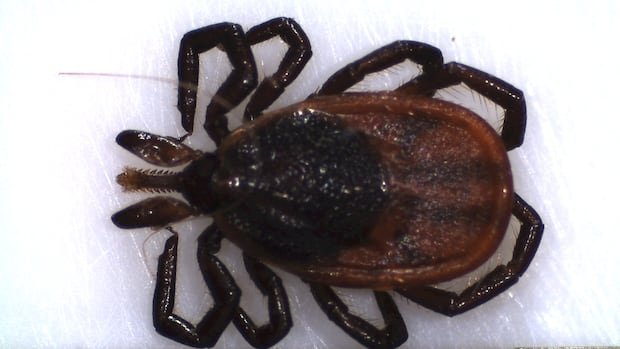
Experts warn that despite Nova Scotia’s snowy winter, there may not be a decrease in the tick population this year. According to tick researchers, deep snow cover acts as insulation for ticks, aiding their survival. Laura Ferguson, an Acadia University biology professor, stated that the snow likely protected a significant portion of the tick population, suggesting a resurgence soon.
CBC meteorologist Ryan Snoddon noted that while some cold spells occurred in December and January, the sustained cold temperatures that could kill ticks arrived after protective snow cover was established. Halifax airport experienced continuous snow cover from Jan. 18 to March 21, the longest period since 2020.
Ticks typically seek shelter under leaf litter during winter, entering a dormant state where they can survive without feeding for months. Extremely cold temperatures below -10 C without insulation can lead to tick mortality due to ice formation within their bodies.
Jantina Toxopeus, a St. Francis Xavier University biology professor, studied how temperature impacts ticks. She mentioned that ticks freeze at temperatures below -15 C in lab conditions but can adapt to gradual temperature changes better. Toxopeus highlighted that ticks are resilient to cold and can survive extreme lows, as demonstrated in Nova Scotia during past frigid winters.
Ferguson predicted that this year’s tick season is likely to be consistent with previous years, given the tick population’s resilience. Despite the snowy winter, experts believe the tick population will persist due to their ability to withstand cold temperatures.
The article also featured related stories on tick prevention and research efforts to control tick populations. The insights provided by researchers shed light on the adaptability and survival mechanisms of ticks in various environmental conditions.

