
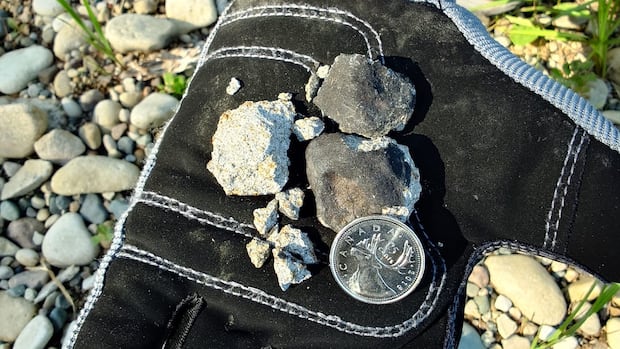
Meteorites originating from a significant fireball that was widely reported in the skies of northern Ontario last month have been found on an island in Lake Huron.
Dave Kenny, a resident of Vancouver Island, along with his American associate Anton Clemens — both part of the volunteer group Meteorite Recovery Specialists — uncovered multiple fragments of the meteor on Cockburn Island on July 11.
This largely uninhabited island is situated off the western tip of Manitoulin Island in Lake Huron’s North Channel.
Samples from their find were sent to the Meteor Physics Group at Western University in London, Ontario, where it was verified that the rocks originated from June 19, when a meteor, weighing several hundred kilograms, shattered in the atmosphere and fell to Earth shortly after 8 p.m.
Kenny has searched for meteorites globally, including locations in the U.S., Chile, and Morocco.
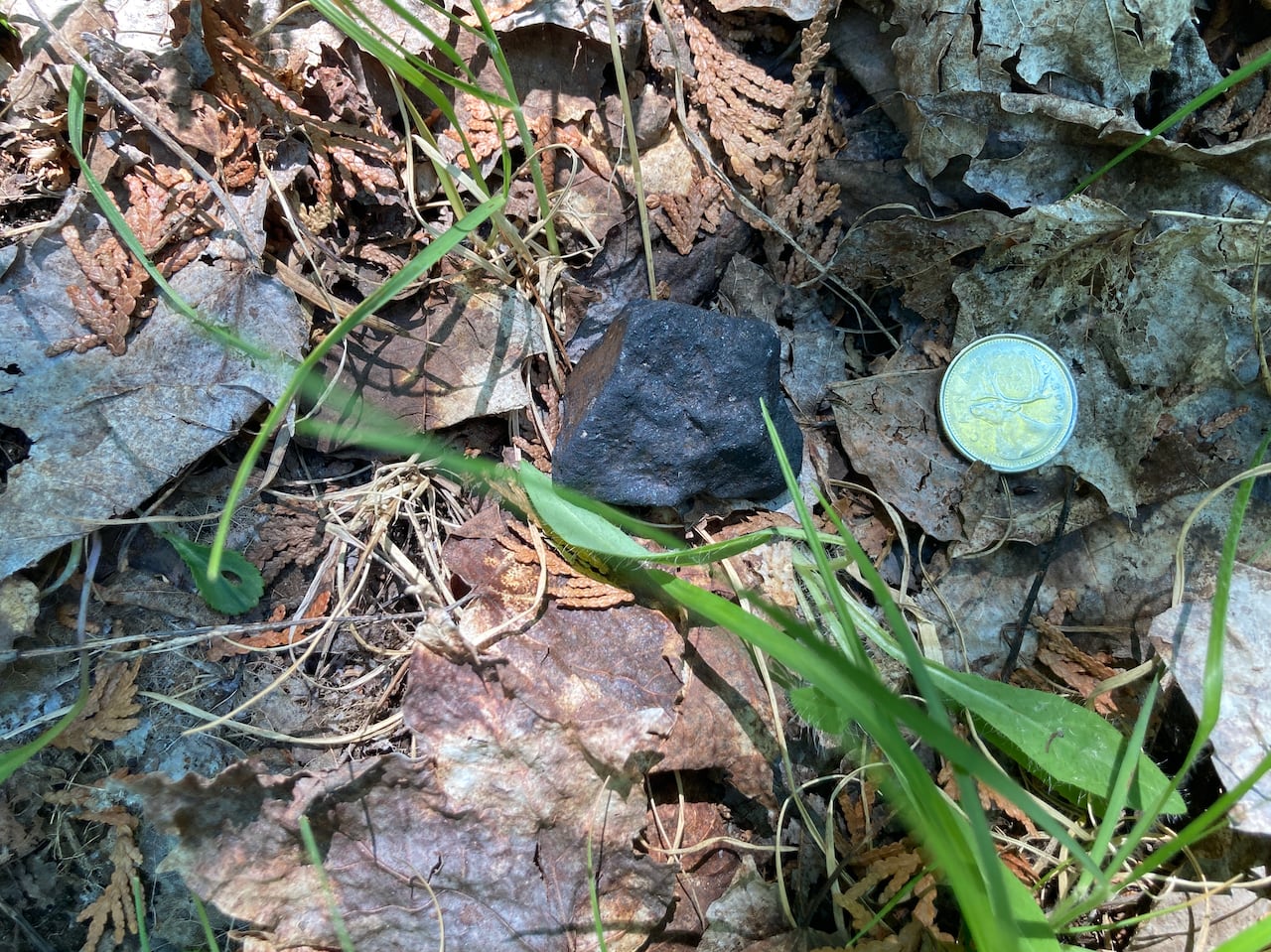
A meteorite weighing over 57 grams from the June 19 fireball event was recovered by Dave Kenny and Anton Clemens on Cockburn Island earlier this month. (Photo supplied by Dave Kenny)
This discovery was particularly meaningful for Kenny, as it represented his first meteorite recovery on Canadian land.
“It’s quite thrilling,” Kenny remarked.
-
Michigan meteorite hunter eager to search for fragments on northern Ontario island
-
Bright fireball in Sault Ste. Marie, Ont., skies ‘shocked and amazed’ onlookers
However, finding the fragments proved to be quite challenging, as noted by the meteorite hunter.
Given that much of the island consists of private or protected areas, Kenny explained to CBC that he engaged in thorough discussions with the Cockburn Island council and the Nature Conservancy of Canada to identify where he and Clemens could legally conduct their search.
He also mentioned that reaching the island was a significant task since it is only accessible by boat.
“We drove to the western part of Manitoulin and camped at Meldrum Bay,” he recounted. “A friend of mine had a sailboat and was able to take two passengers.”
“He transported us from Meldrum Bay to the eastern side of Cockburn Island. We searched all day along the roads and in accessible public areas, then returned to the boat for sleep in the evenings.”
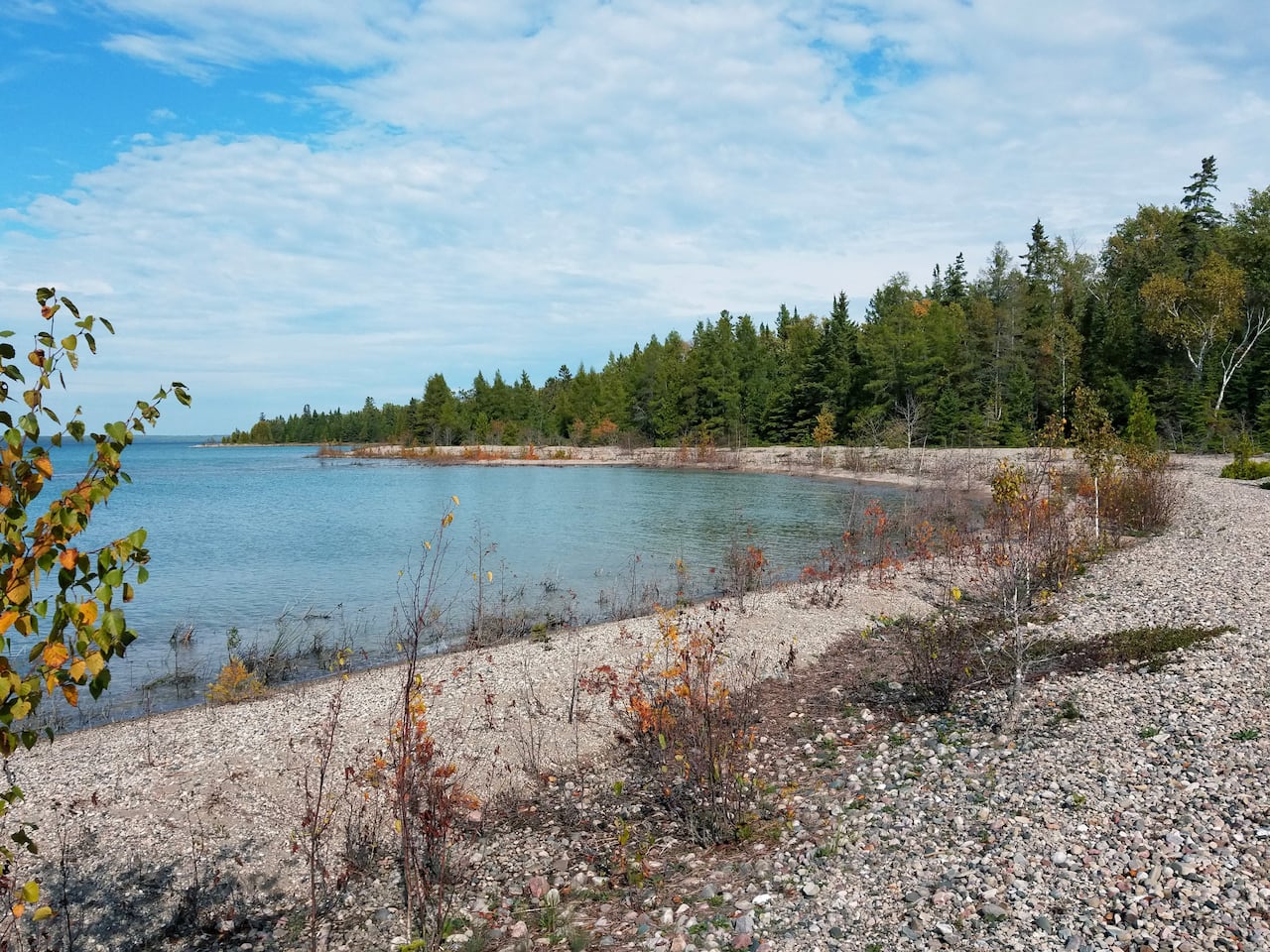
Cockburn Island, a heavily wooded and mostly uninhabited landmass west of Manitoulin Island, is primarily owned by the Nature Conservancy of Canada and spans over 17,000 hectares (Supplied/Nature Conservancy Canada)
Kenny and Clemens dedicated two and a half days to their search on the island, spending 12 hours each day and covering nearly 50 kilometers on foot.
Remarkably, they found a fragment just two hours after arriving on the island, which turned out to be their largest find, weighing 57.6 grams.
<p"It was a completely intact stone," he stated. "It was located on the roadside."
Two days later, they discovered another piece, broken into several sections, about two kilometers south of Tolsmaville — a summer destination situated on the northeast end of Cockburn.
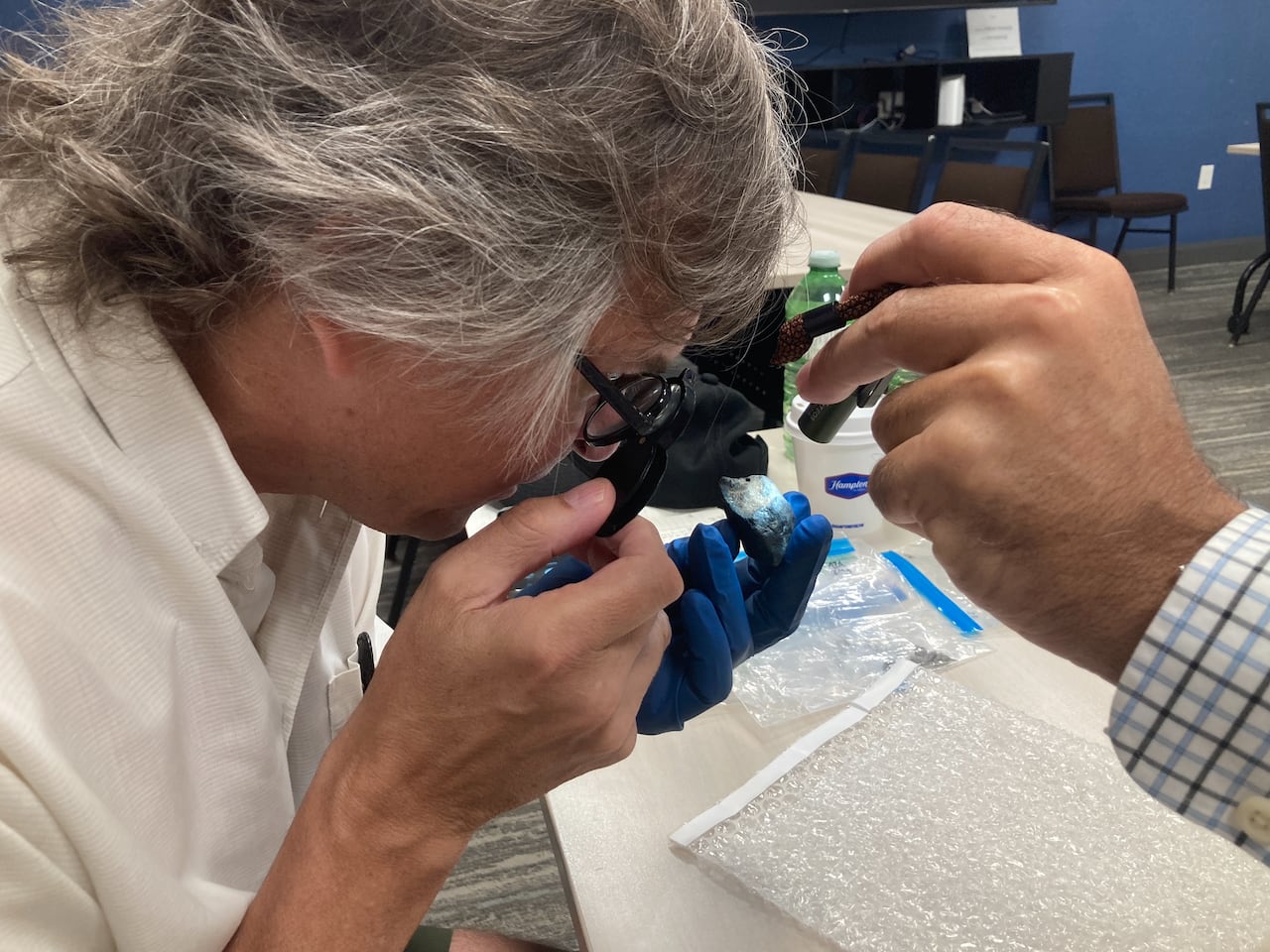
Phil McCausland from Western University’s Meteor Physics Group examines a meteorite found by Dave Kenny and Anton Clemens on Cockburn Island earlier this month. (Photo supplied by Dave Kenny)
“All the stones we collected were found along township roads and public access areas,” Kenny explained.
“Many of the stones were located just feet away from ATV paths, so we were fortunate to arrive early enough to recover these before they could be damaged by tires.”
The larger piece sent to Western University will undergo analysis over the next six months, as per Kenny.
While they have not yet been officially classified, the fragments are believed to be chondrites — a prevalent type of meteorite found on Earth — originating from the asteroid belt located between Mars and Jupiter.

