
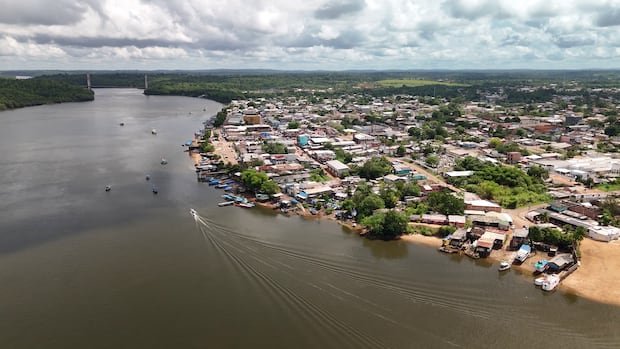
At the waterfront in Oiapoque, a city on Brazil’s northern coast, Cleidiney Ribeiro guides his boat into the river. Expressing optimism, he mentions the anticipated progress in Oiapoque as he heads towards the point where the river merges with the Atlantic Ocean.
Brazil’s state-run oil company Petrobras has recently initiated exploratory drilling 170 kilometers off the Amazonian coast, coinciding with the commencement of COP30, the largest climate conference in Belém, Brazil. During the conference, Brazil’s President Luiz Inácio Lula da Silva highlighted the need to shift away from fossil fuel-based development models due to the Earth’s limited sustainability.
Despite these statements, Brazil is on the brink of an impending oil boom if oil deposits are confirmed in the Foz do Amazonas basin, a portion of which lies 500 kilometers from the Amazon River mouth. Suely Araújo, a public policy coordinator at Brazil’s Climate Observatory, criticized the government’s decision to escalate oil production amidst the climate crisis, citing its lack of coherence.
President Lula emphasized the importance of energy transition at COP30, where thousands of delegates and observers have convened to address fossil fuel emissions and promote the adoption of sustainable energy sources. Lula pledged to allocate a portion of oil revenues to support this transition.
In Oiapoque, the spotlight is on the potential oil reserves that could transform the economically disadvantaged region. Residents are hopeful that the discovery of oil will lead to city development and increased economic opportunities. However, concerns have been raised by environmentalists and Indigenous communities about the potential environmental impact and lack of consultation regarding the oil licensing process.
The ANP estimates that the oil deposits in Brazil’s equatorial margin could reach up to 30 billion barrels, creating job opportunities and addressing poverty in the region. While the government sees this as a positive development, Indigenous groups fear the potential ecological consequences and doubt the promised economic benefits.
Indigenous communities, along with environmental activists, are gearing up for protests to oppose further drilling activities near the Amazon region. As the debate surrounding oil exploration and environmental conservation intensifies, the challenges faced by President Lula and the international community attending COP30 underscore the complex dynamics of balancing economic growth with environmental sustainability.

