
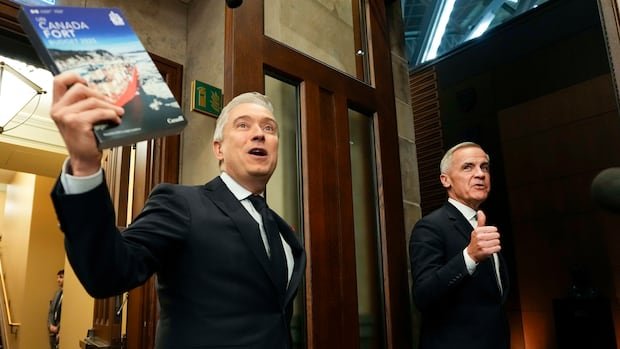
The 2025 federal budget is designed to guide the Canadian economy through the current crisis, emphasizing the depth of the economic challenges and the importance of navigating trade disputes carefully. Finance Minister François-Philippe Champagne stressed the need for bold and decisive actions to shape the nation’s future.
Outlined in the budget are different economic growth scenarios for the next five years. The optimistic scenario anticipates a return to normal global trade if U.S. tariffs are lifted. Conversely, the pessimistic scenario forecasts a contraction in the Canadian economy, with potential high unemployment and prolonged weak growth.
The budget projects a significant reduction in the nominal GDP compared to previous forecasts, indicating a potential further economic downturn. Despite the promise of a swift recovery from recent trade disruptions, economist David Macdonald remains skeptical, pointing out the ongoing uncertainty and challenges facing Canada’s economy.
The budget aims to revamp the economy by supporting businesses in exploring new markets and adapting to an unpredictable future. It includes tax incentives for domestic companies to expand and provisions to promote Canadian products in the global market. However, Macdonald highlights the complexities involved, especially with the economy teetering on the edge of a recession.
Sahir Khan from the Institute of Fiscal Studies and Democracy warns that the budget may need adjustments if economic conditions worsen. Potential threats include escalating trade conflicts, external shocks, or delays in realizing the budget’s benefits. Khan emphasizes the long-term nature of the budget’s impact, suggesting that immediate results may not be evident.
Despite the budget’s ambitious goals, the Canadian economy is already experiencing significant challenges. The primary hurdle lies in ensuring economic stability amidst ongoing disruptions. The successful implementation of the proposed changes hinges on averting a recession, curbing unemployment, and mitigating trade tensions beyond the government’s immediate control.

