
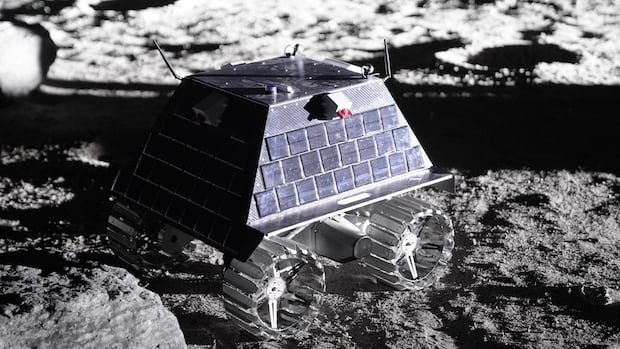
The Canadian Space Agency (CSA) has made the decision to scrap its ambitious lunar rover mission, as outlined in its 2026-2027 departmental plan. Initially unveiled in 2022, the lunar rover project aimed to be Canada’s first rover, constructed by Canadensys and scheduled to travel to the moon aboard a launch vehicle from U.S. company Firefly Aerospace.
The news of the cancellation was disclosed by the space industry website SpaceQ. Gordon Osinski, the principal investigator of the mission and a planetary geologist from Western University, expressed his disappointment upon learning about the cancellation about a month ago. He described the mission as a significant milestone in Canadian space exploration history, envisioning it as the country’s inaugural rover mission to another planetary surface after years of aspirations.
Planned for the moon’s south polar region, the rover’s landing site held great importance due to its water presence and association with the upcoming Artemis IV mission to reintroduce humans to the lunar surface. Furthermore, Artemis II, scheduled for an early April launch, will feature Canadian Space Agency astronaut Jeremy Hansen among the four astronauts orbiting the moon.
Despite the setback, CSA emphasized its commitment to deep-space and lunar surface exploration, aiming to leverage the existing investments in the project. The lunar rover was part of the Lunar Exploration Accelerator Program (LEAP), fostering partnerships between academia and industry for lunar missions. The cancellation prompted reflections on the collaborative efforts and research advancements achieved through the project.
While Canadensys did not respond to CBC News queries, Osinski expressed hope that the scientific contributions and collaborations from the project would endure. He emphasized the achievement of building a robust science team and the pride in their collective accomplishments.

