
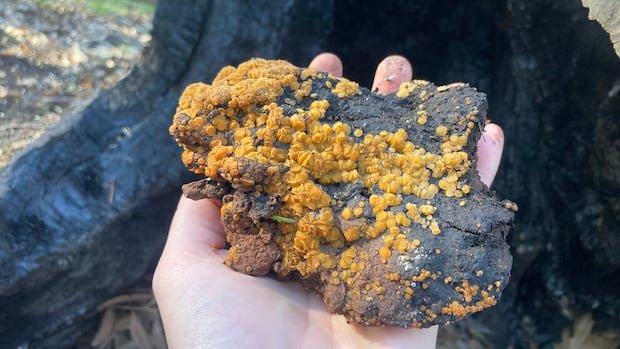
After a wildfire, the forest floor transforms into an eerie landscape covered in an orange crust of deadwood. This signifies the beginning of rejuvenation as small fungi start to thrive in the aftermath. Pyronema, fire-loving fungi, rapidly colonize the burnt areas, releasing spores that resemble smoke.
These fungi play a crucial role in post-fire recovery by consuming ash, carbon, and other harmful byproducts left by the fire. As climate change leads to more intense and frequent wildfires, the study of these organisms has gained significance. The fungi remain dormant until triggered by the heat of a wildfire, adapting to survive and aid in the ecosystem’s regeneration.
Research indicates that these fungi, insulated by the soil, can withstand extreme temperatures during wildfires. They consume toxic elements, including carcinogenic compounds, and convert them into spores and fruiting bodies. This process kickstarts the food web, supporting the growth of insects, mites, and bacteria that follow as secondary responders.
Moreover, fungi help prevent erosion and stabilize the soil post-fire. Their filamentous structures bind soil particles together, reducing the risk of landslides. Studies have shown a correlation between the recovery of fungal communities and plant communities after a wildfire, emphasizing their interconnectedness in ecosystem restoration.
With potential commercial applications and the ability to break down pollutants, fire-loving fungi could be harnessed for industrial purposes. While manipulating these fungi for accelerated forest recovery remains untested, prescribed burns may enhance their effectiveness in responding to wildfires. By releasing dormant spores, fungi can prime the ecosystem for better recovery in future fire events.

