
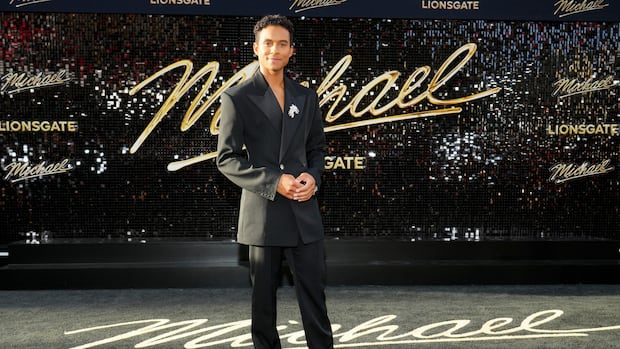
In spite of mixed reviews, fierce competition, and even last-minute script changes and legal complications, the biographical film about the Jackson family, Michael, has achieved the status of the highest-grossing biopic in history.
Directed by Antoine Fuqua, the film has reached a remarkable $977 million in worldwide box office sales, surpassing 2025’s Oppenheimer to secure the record this weekend, exceeding the previous benchmark of $975 million. It had already set the record for the highest-grossing musical biopic, outpacing Bohemian Rhapsody which accumulated $911 million by mid-June. Additionally, it is now Lionsgate Films’ top-grossing movie, overtaking 2013’s The Hunger Games: Catching Fire.
Michael chronicles the life of pop icon Michael Jackson, portrayed as an adult by his real-life nephew Jaafar Jackson, tracing his journey from performing with the Jackson 5 to achieving monumental success with hits like Billie Jean, Beat It, and Thriller.
However, the narrative notably omits any reference to the allegations of child sexual abuse made against Michael Jackson, who passed away in 2009. In an interview with the New Yorker, Fuqua indicated that the initial script was intended to include these allegations: a scene was planned where Michael Jackson would be searched by police during the infamous 1993 raid on Neverland Ranch.
Although Fuqua wrote and filmed various segments addressing this issue, they were ultimately removed and reworked. Reports suggest that a legal agreement between the Jackson estate and Jordan Chandler, who, along with his family, accused the singer of molesting him at age 13, played a significant role in the decision to alter the storyline.
According to reports from Puck, The Hollywood Reporter, and others, an out-of-court settlement prohibited the inclusion of Chandler’s story in any productions about Jackson’s life—a condition that producers were unaware of until filming was already in progress.
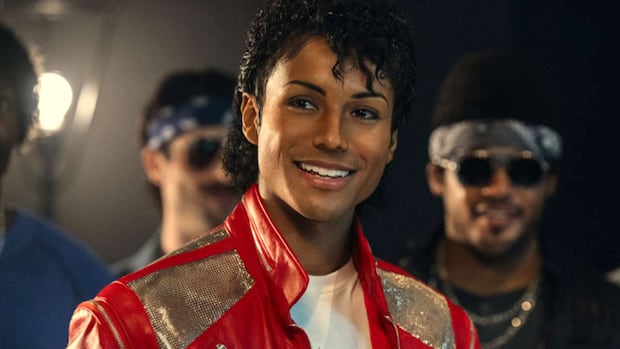
Produced in partnership with the Jackson estate, the new biopic has faced backlash for glossing over the serious allegations of sexual abuse against the celebrated pop artist that have loomed over his legacy.
The theatrical release concludes in 1988, prior to any public claims against Jackson. The extensive reshoots, which cost up to $50 million, were financed by the estate.
Jackson and his estate have consistently denied any wrongdoing regarding the allegations of sexual abuse. Chandler’s family ceased cooperation with law enforcement following their settlement, leading to the closure of the investigation. Jackson did not admit guilt in that settlement but was later charged with similar accusations in 2005, from which he was acquitted on all counts.
Nonetheless, this portrayal has sparked considerable controversy surrounding the film, with think pieces and calls for boycotts emerging from certain audience members, journalists, and even family members who expressed concerns about the representation of Jackson’s life. Some critics have accused Michael of distorting Jackson’s narrative and omitting critical elements to reshape his image for a younger audience.
-
Commotion
Michael is about the Michael Jackson brand, not the man
-
REVIEW
Michael Jackson biopic turns up the music and mutes the controversy. What’s wrong with that?
Janet Jackson, Michael’s sister and fellow superstar, chose not to appear in the film and is conspicuously absent from the storyline. Paris Jackson, his daughter, expressed on social media that her input was overlooked by producers, and that the final product would likely appeal to those who romanticize her father’s life.
Dan Reed, the director of the documentary Leaving Neverland, which addresses these allegations, noted that the existence of Michael reflects the evolving perception of the artist over time.
“People just don’t care,” he told The Hollywood Reporter. “I think many individuals simply enjoy his music and choose to ignore the controversies.”
Divided Opinions
Beyond its controversial themes, the film has also faced critiques regarding its pacing and narrative structure. A range of reviews highlighted a superficial storyline that primarily connects musical performances, along with an overly simplistic and saintly portrayal of the main character—common critiques of musical biopics. Similarly, the musical biopic Bob Marley: One Love received significant criticism despite generating a substantial $181 million.
Moreover, the previous record-holding musical biopic, Bohemian Rhapsody, received a similar mixed reception for its simple—and reportedly inaccurate—representation of Queen’s lead singer, Freddie Mercury.
Conversely, some reviewers found elements to appreciate in Michael. Both The Hollywood Reporter and Deadline praised Jaafar Jackson for effectively embodying his uncle. Additionally, streaming numbers for the singer surged by 95 percent following the blockbuster’s April release.
Nevertheless, Michael‘s initial weekend projections were modest, estimated between $50 million and $70 million for the U.S. and Canadian box office. The film exceeded expectations, grossing nearly $100 million, nearly doubling the opening weekends of other major music biopics such as Straight Outta Compton and Bohemian Rhapsody.
This successful trend has persisted since then. And as both Fuqua and Lionsgate have hinted, at least one more film focusing on Michael Jackson’s later years is anticipated to be released in the future.

