
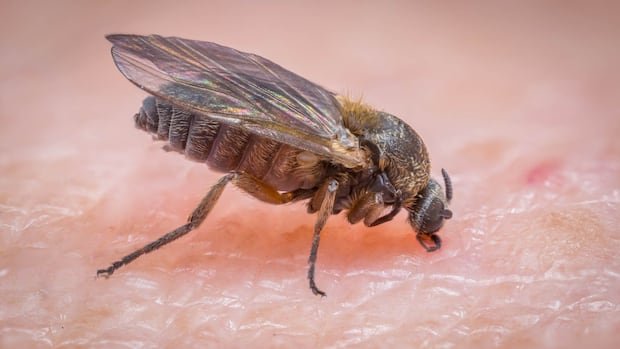
As temperatures rise across Nova Scotia, residents are encountering an increased presence of blackflies compared to prior years. However, there may be a positive aspect to this surge in blackfly activity.
Andrew Hebda, a former zoology curator at the Nova Scotia Museum, explained to CBC’s Information Morning Halifax that blackflies are usually inactive during winter and colder periods. They typically emerge in spring when the weather becomes warmer, and this season, they are appearing swiftly.
Hebda mentioned that if the current weather conditions persist for 10 days to two weeks, the majority of blackflies will have emerged, reproduced, and completed their life cycle for the summer. Unlike mosquitoes, which can have multiple generations in a year, blackflies only have one generation annually, disappearing after reproduction.
Hebda noted that last year’s dry conditions suppressed blackfly populations, despite higher temperatures. To avoid blackflies, he advised staying away from tall grass and wooded areas. For mosquitoes, staying in open areas with strong winds can help. Using bug sprays to mask your scent or wearing bug jackets can provide a physical barrier against insects.
In other news, Nova Scotia is planning to hold annual offshore wind bid calls, and two former Baddeck commissioners will compete in a byelection in Victoria County. Additionally, a new shelter in Bridgewater aims to benefit the community after the closure of a controversial drop-in center. Sydney boxer’s assault plea request was dismissed by a judge, and the Alderney ferry in Halifax returns to a 15-minute service schedule after delays.
For more details, you can find the original article here.

