
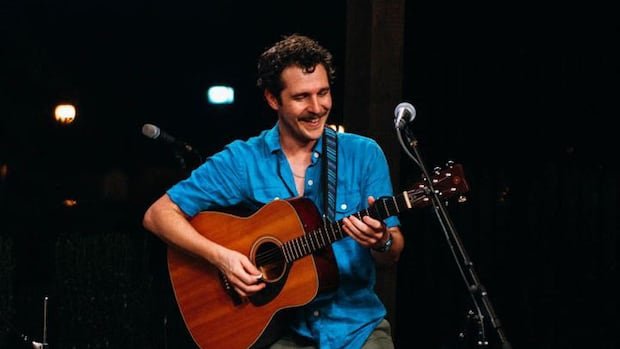
When the United States and Israel conducted strikes on Iran at the end of the previous month, songwriter and musician Joseph Terrell found himself deeply affected by the conflict. It wasn’t long before he channeled his thoughts into crafting song lyrics.
Hailing from North Carolina, Terrell reflected, “I began pondering the prevalent myth in the U.S. that depicts us as heroic adventurers galloping into the sunset. However, the song I penned, titled ‘Cowboy Movie,’ delves into the origins of these myths and the realization that we may not be the heroes we perceive ourselves to be.”
Terrell clarified that his song, which he previewed on TikTok, does not target any specific political figure due to the numerous individuals who align with the song’s themes. However, it does draw attention to specific incidents, such as the tragic bombing of a girls’ school in Iran on the initial day of the conflict, resulting in the loss of over 165 lives, predominantly children. Although no country has claimed responsibility for the attack, preliminary investigations, as reported by The New York Times, suggest U.S. involvement.
Embracing the digital platform, Terrell, along with other contemporary artists, is revitalizing the tradition of folk protest songs for an online audience. This resurgence of political folk music intertwines with the growing popularity of country music, finding a foothold in the simplicity of expression amidst a technologically dominated era.
Noted music theory professor Noriko Manabe from Indiana University highlighted the distinctive nature of this modern protest folk movement. Unlike earlier folk music eras, the current wave features hyper-specific lyrics that directly call out politicians and administrations by name, enhancing resonance on social media platforms.
Artists like Jesse Welles have garnered significant followings on social media by swiftly releasing tracks that address pressing issues, such as immigration enforcement and geopolitical conflicts. Through poignant and timely releases, these musicians capture the essence of contemporary socio-political landscapes, drawing parallels with historical folk activism.
As the genre evolves, scholars like Holly Swartzendruber emphasize the need for this protest music wave to transcend the digital realm and engage with audiences in real-world settings. While the internet serves as a potent platform for expression, the sustainability of this movement hinges on tangible connections with communities and meaningful activism beyond online spaces.
Folk artists like Olive Klug exemplify this fusion of music and activism, engaging audiences in live settings and promoting social causes. Through their performances and interactions, artists like Klug aim to instigate change and foster a sense of unity among listeners, transcending the virtual realm to impact the physical world.

