
A month ago, Wayne Uhlman from Lunenburg County experienced severe fatigue during his doctor’s visit. He was so shaken by cold chills that he struggled to hold a glass of water.
He was promptly directed to the emergency room, where he was given intravenous fluids, underwent a blood test, and received a 21-day course of antibiotics.
It was only after two weeks that Uhlman discovered he had tested positive for anaplasmosis, a tick-borne bacterial illness that is becoming increasingly prevalent in Nova Scotia.
“I was genuinely shocked because I knew I hadn’t had a tick on me for more than a couple of hours,” Uhlman remarked.
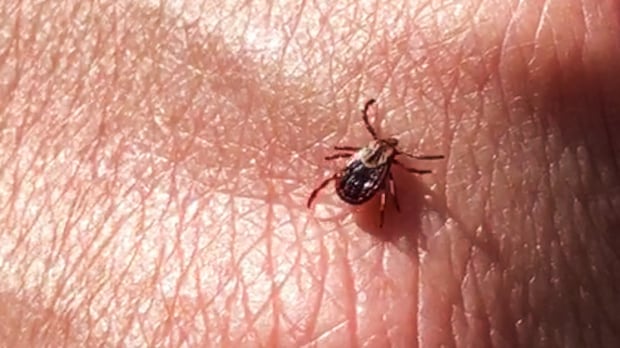
Anaplasmosis is an infection caused by bacteria transmitted through bites from blacklegged ticks (commonly known as deer ticks) and brown dog ticks, affecting both humans and animals.
As of July 13, Uhlman is among the 245 reported cases of this disease in Nova Scotia this year, as stated by the Department of Health and Wellness.
With the increase of tick populations throughout Canada, likely attributed to extended warmer seasons, anaplasmosis has emerged as the second most prevalent tick-borne illness in the country, following Lyme disease.
When Nova Scotia designated anaplasmosis as a reportable disease in 2023, it recorded 317 cases. In contrast, the previous year saw 681 cases.
Although Uhlman mentioned that the tick was on him for a brief period, that duration might suffice to contract the disease. A recent review by Emergency Medicine Saint John indicates that ticks can transmit the bacteria responsible for anaplasmosis in as little as four hours.
Flu-like symptoms are common, but not always present
Anaplasmosis generally leads to flu-like symptoms such as fever, chills, and headaches, which typically resolve without intervention.
However, as noted by Dr. Glenn Patriquin, a microbiologist and infectious diseases physician with Nova Scotia Health, some individuals may remain unaware of their infection, as symptoms do not always manifest.
This circumstance encourages hospitals to test for anaplasmosis, even when physicians have only requested a blood test for Lyme disease.
Unlike Lyme disease, which is characterized by a distinctive bull’s-eye rash around the tick bite, Patriquin pointed out that rashes are rarely associated with anaplasmosis.
Doxycycline is a frequently prescribed antibiotic for both anaplasmosis and Lyme disease, according to Patriquin. Due to the time required for lab results, doctors often initiate treatment immediately based on the patient’s symptoms and medical history to expedite recovery.
Patriquin mentioned that anaplasmosis is generally much more acute and it is “extremely rare” for it to result in any long-term complications.
The incidence of this disease is also rising among pets, but Patriquin affirmed that there is no evidence to suggest that it can be transmitted between humans and animals.
-
Nova Scotia woman unable to eat meat or dairy due to suspected tick-bite allergy
-
Spike in guinea fowl sales in N.S. as homeowners seek natural tick control
According to Nova Scotia’s Department of Health and Wellness, anaplasmosis can, in rare instances, be transmitted through blood transfusions, organ donations, and from mother to baby during pregnancy.
The department also emphasizes that older adults and individuals with pre-existing health issues are at a significantly higher risk of severe illness if they contract anaplasmosis.
A representative from the department stresses that the best way to protect oneself from any tick-borne disease is to avoid bites altogether, and individuals should regularly conduct “tick checks” after outdoor activities.

With mild New Brunswick winters facilitating the growth and migration of tick populations, tick biologist Vett Lloyd emphasizes the importance of mastering thorough tick checks to help prevent the spread of diseases.
Uhlman reported that he has completely recovered since his encounter with anaplasmosis.
He expressed his hope that by sharing his experience, he can enhance public awareness regarding this disease, which can present a variety of symptoms, including the absence of any symptoms.
“People need to know because most associate tick bites with Lyme disease and its characteristic bull’s-eye,” he stated.
“This disease does not exhibit a bull’s-eye, so if you find a tick on you, you should be alert if you begin to feel unwell.”
MORE TOP STORIES
-
N.S. woman dials 911 to report erratic driver; a Mountie calls her from inside her home
-
N.S. dentist criticizes lenient sentence for ex-employee who embezzled $92K from practice
-
Community puzzled by vandalism of previously damaged historic tree in Halifax Public Gardens
-
Greenwood base shuts down arena due to asbestos discovery
-
Why Sloan’s bassist is touring Europe with an R.E.M. tribute band led by a Hollywood actor

